
US proposes partitioning Gaza in reconstruction plan


Vice President JD Vance and senior Trump administration officials unveiled a controversial Gaza reconstruction strategy on Tuesday that would effectively divide the territory into distinct zones controlled by Israel and Hamas, with American funding limited to Israeli-controlled areas until the militant group is fully disarmed.
During a visit to Israel’s newly established Civil-Military Coordination Center in Kiryat Gat, Vance joined Jared Kushner, President Trump’s son-in-law and key ceasefire negotiator, in presenting what amounts to a two-zone approach to Gaza’s post-war governance. The plan represents a significant shift in U.S. Middle East policy, essentially acknowledging Hamas control over portions of Gaza while incentivizing reconstruction in Israeli-controlled territory.
Reconstruction funds limited to Israeli-controlled areas
The reconstruction funding strategy creates a stark geographic divide, with American financial assistance exclusively directed toward the approximately 155 square kilometers under Israeli military control—representing about 42 percent of Gaza’s total territory. Kushner explicitly stated that “no reconstruction funds will be going into areas that Hamas still controls,” effectively creating economic incentives for Palestinian cooperation with Israeli administration while leaving Hamas-controlled zones without international development assistance.
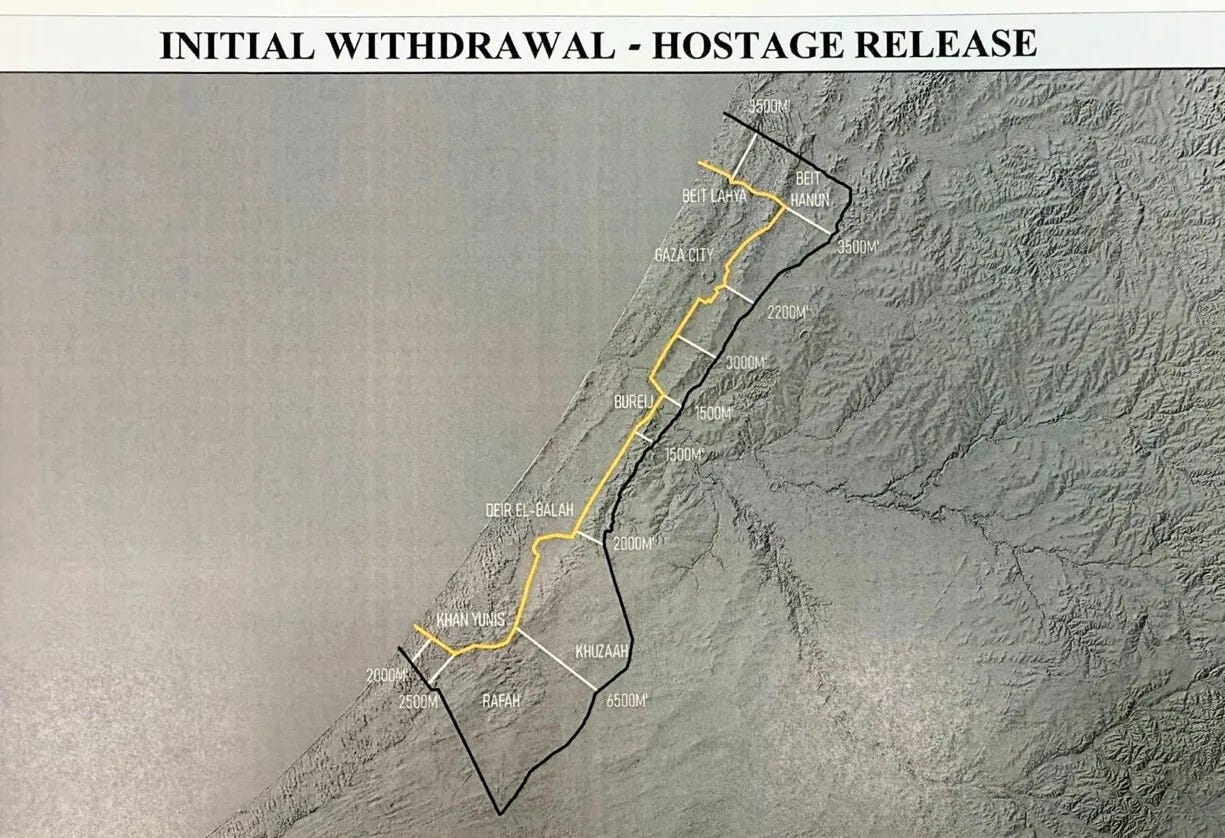
This territorial funding approach operates within the broader three-phase Israeli withdrawal plan, where reconstruction efforts will initially focus on areas within the “yellow line” established during ceasefire negotiations. Under current arrangements, Israel maintains control over critical infrastructure, including all border crossings with Egypt, most of Khan Younis governorate, nearly the entire Rafah governorate, and portions of Gaza City, including the Shujayea, Tuffah, and Zeitoun neighborhoods.
“No reconstruction funds will be going into areas that Hamas still controls. There are considerations happening now in the area that the IDF controls.”
— Jared Kushner
The funding restrictions mean that hundreds of thousands of displaced Palestinians in Hamas-controlled areas will likely remain without access to international reconstruction resources, potentially prolonging their displacement and creating pressure for territorial consolidation under Israeli administration.
International coordination center established
The Trump administration has established a Civil-Military Coordination Center featuring approximately 200 U.S. military personnel, along with troops from Britain, Canada, Germany, Denmark, and Jordan. The facility, designed to monitor ceasefire implementation and coordinate humanitarian aid, represents the largest U.S. military deployment related to Gaza stabilization efforts.
The CMCC opened on October 17, marking the formal establishment of a main coordination hub for Gaza assistance five days after world leaders signed the U.S.-brokered plan. According to U.S. Central Command, the center will monitor implementation of the ceasefire agreement, featuring an operations floor that allows staff to assess real-time developments in Gaza. However, U.S. military personnel will not deploy into Gaza itself, instead facilitating international assistance from the coordination center.
Vance emphasized the challenging nature of the mission during his meeting with Israeli Prime Minister Benjamin Netanyahu, stating that the administration faces “a very, very tough task ahead of us, which is to disarm Hamas but rebuild Gaza to make life better for the people in Gaza, but also to ensure that Hamas is no longer a threat to our friends in Israel”.
Massive reconstruction costs
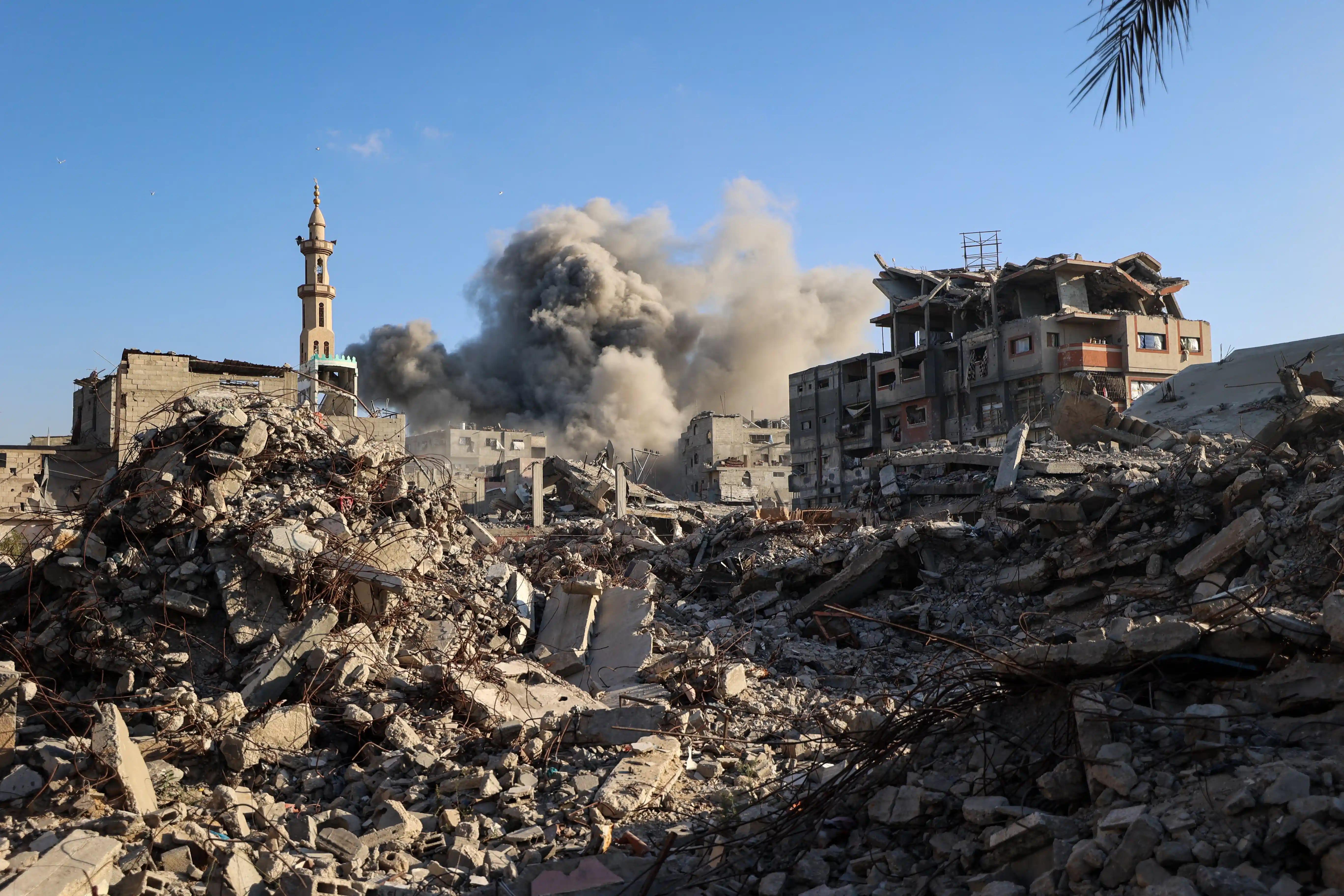
The reconstruction effort faces enormous financial challenges, with UN estimates placing the cost at $70 billion over multiple years, including $20 billion needed in the first three years alone. The Palestinian Authority has separately unveiled its own $67 billion reconstruction plan, though funding sources remain unclear.
According to the UN Development Programme’s Jaco Cilliers, destruction across the enclave “is now in the region of 84 per cent. In certain parts of Gaza, like in Gaza City, it’s even up to 92 per cent”. The latest Interim Rapid Damage and Needs Assessment on Gaza by the UN, the European Union, and the World Bank estimated the damage at $70 billion.
Kushner touted a vision of a “new Gaza” that can be built “to give the Palestinians living in Gaza a place to go, a place to get jobs, a place to live”. However, the plan has drawn criticism from Palestinian groups, who have labeled it a land grab that disregards the needs of displaced individuals and their claims to autonomy.
The reconstruction plan comes as the fragile Gaza ceasefire, which took effect on October 10, continues to face challenges. According to Gaza officials, approximately 100 Palestinians have been killed by Israeli forces since the truce began, with Israel claiming these individuals were approaching restricted military zones.