
Trump’s $230 million DOJ shakedown raise ethical concerns as shutdown threatens benefits for millions

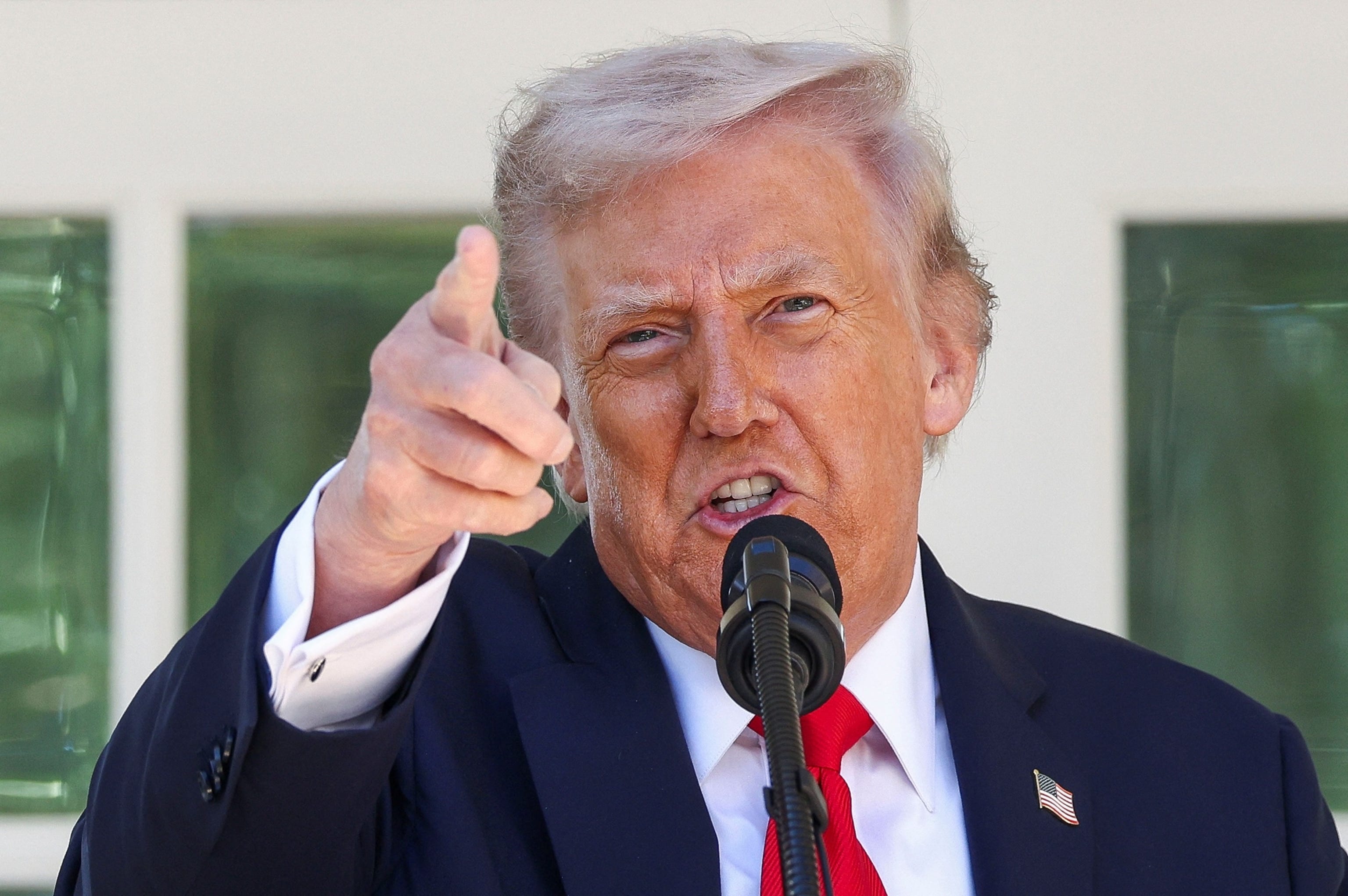
President Donald Trump is seeking $230 million in taxpayer funds from his own Justice Department as compensation for past federal investigations, raising unprecedented ethical questions during a government shutdown that has already placed critical social safety nets for low-income Americans at risk.
The claims, filed through administrative paperwork in 2023 and 2024 under the Federal Tort Claims Act, seek damages related to the FBI’s investigation into alleged Russian interference in the 2016 presidential election and the 2022 search of his Mar-a-Lago estate for classified documents. Any settlement exceeding $4 million would require approval from Deputy Attorney General Todd Blanche, Trump’s former criminal defense attorney who represented him in multiple cases, including the New York trial that resulted in 34 felony convictions.
Conflict of interest concerns
The potential payout, which would come from taxpayer funds, has drawn criticism from ethics experts and legal analysts who point to the glaring conflict of interest. Blanche, who was confirmed by the Senate in March 2025 with a 52-46 vote, defended Trump in two criminal cases brought by the Justice Department before assuming his current role as the agency’s second-in-command.
“Any settlement might ultimately be approved by senior department officials who defended him or those in his orbit,” reported the New York Times.
Stanley Woodward, the Associate Attorney General who could also approve such a settlement, previously served as defense counsel to Walt Nauta, Trump’s co-defendant in the classified documents case. When asked about the situation, Trump acknowledged the awkwardness, stating, “It’s awfully strange to make a decision where I’m paying myself”.
The Justice Department spokesperson said that “officials at the Department follow the advice of career ethics officials,” though Attorney General Pam Bondi dismissed her chief ethics advisor in July. Former Nixon White House Counsel John Dean told CNN that Trump has “eliminated nearly all internal oversight offices, not just within the DOJ but throughout the government,” characterizing this as “clearly intentional”.
Unprecedented amid government crisis
Trump’s $230 million request significantly exceeds previous Justice Department payouts to victims of government failures. The settlement amount surpasses the $138.7 million awarded to victims of convicted sex offender Larry Nassar, the $88 million settlement for families of victims from the Mother Emanuel shooting in Charleston, South Carolina, and the $31.4 million settlement for victims of the Sutherland Springs mass shooting in Texas.
Federal data from the Treasury Department shows that as of 2025, the Justice Department has disbursed only $207 million for settlements related to claims against the department across more than 250 cases, with many receiving less than $2 million each.
The claims remained dormant during the Biden administration due to a policy of pausing civil litigation during ongoing criminal investigations. Trump acknowledged he would have final say on any payout, telling reporters in the Oval Office on October 21 that the government owes him “a lot of money” and claiming he would donate any payment to charity.
Shutdown’s impact on low-income Americans
The controversy over Trump’s potential multimillion-dollar payout comes as the government shutdown enters its 22nd day, making it the second-longest federal funding lapse in U.S. history, breaking his own record from his first term. The shutdown has placed essential assistance programs serving tens of millions of low-income Americans in jeopardy, with several states warning that benefits may be halted entirely.


The Supplemental Nutrition Assistance Program (SNAP), which serves approximately 42 million low-income Americans, faces an imminent funding crisis. Texas has warned its millions of recipients that all November SNAP benefits will be halted if the shutdown continues past October 27. Pennsylvania officials announced they will not be able to distribute SNAP benefits, with the state’s Department of Human Services website stating: “Because Republicans in Washington DC failed to pass a federal budget, causing the federal government shutdown, November 2025 SNAP benefits cannot be paid”.
Minnesota, New York, California, Illinois, Missouri, and Oklahoma have issued similar warnings about disruptions to SNAP benefits. Agriculture Secretary Brooke Rollins emphasized the severity of the situation, stating, “We’re talking millions and millions of vulnerable Americans — of hungry Americans — that are not going to have access to these programs because of this shutdown”.
The Special Supplemental Nutrition Program for Women, Infants, and Children (WIC), which assists more than 6 million low-income mothers and young children, is projected to exhaust its $150 million contingency fund within two weeks of the shutdown. The program provides vouchers for infant formula, fresh produce, low-fat milk, and other nutritious staples that are frequently beyond the financial means of low-income families.
Trump’s policies harm Americans in the long run
The shutdown crisis follows a series of Trump administration policies that have disproportionately harmed low-income Americans. According to a September 2025 report by The Budget Lab at Yale, Trump’s sweeping tariff regime could push 875,000 additional Americans into poverty by 2026, including 375,000 children.
“Tariffs essentially act as a tax on American households. Because these tariffs target goods and services rather than income, they disproportionately affect those who spend a larger share of their income rather than save.”
— Ernie Tedeschi, associate director of policy analysis at The Budget Lab
The report found that lower-income families are particularly impacted because they allocate a larger portion of their income to essential living costs and purchase a greater quantity of imported goods vulnerable to price increases. The poverty rate is projected to rise to 10.7% when factoring in Trump’s tariffs, up from 10.4% without them.
Trump’s “One Big Beautiful Bill” tax and spending legislation, signed into law in July 2025, compounds these challenges for low-income households. A Yale University analysis found that the bottom 10% of American earners will see their annual income decline by nearly $2,400, or 6.1%, primarily due to an average $1,350 loss from tariffs combined with roughly $1,200 in reductions from the tax bill. This demographic has an average income just below $39,000.
Middle-income households earning between approximately $105,000 and $122,000 will find their average tax cut of $1,200 more than offset by a cumulative tariff-induced price increase of $2,200. In contrast, the richest Americans will lose approximately $5,250 in disposable income due to tariffs, representing only 1% of their income, while tariffs reduce the income of the lowest 10% by over 3.5% of their disposable income.
According to the Center on Budget and Policy Priorities, cuts in Trump’s reconciliation package represent “the largest reduction to SNAP in history”. The Urban Institute estimates that changes to SNAP will lead to 22.3 million families losing some or all of their benefits. The legislation also strips away health coverage for more than 11 million people through Medicaid cuts.
Layoffs targeting vulnerable programs
The Trump administration has leveraged the shutdown to implement mass firings of federal workers, with approximately 4,100 employees laid off across seven agencies as of mid-October. The administration fired almost all 60 staff at a college-preparation program for low-income students, targeting the Federal TRIO Programs that Republican lawmakers had defended earlier in the year.
Staff reductions have also hit programs implementing tax incentives for economic development in low-income communities, potentially hampering benefits made permanent in Trump’s own tax legislation. Two major unions representing federal workers, AFSCME and AFGE, filed a lawsuit challenging the administration’s plan to conduct mass firings during the shutdown, arguing it violates the Antideficiency Act.
Brian McGrain, executive director of Michigan Community Action, an anti-poverty organization, expressed concern about the cascading effects: “If SNAP benefits go unfunded, where will people turn? We anticipate a wave of need that we may not be able to address”. Many nonprofits that provide safety net services depend on federal grants that are currently delayed due to the shutdown.
Growing economic insecurity
The combination of Trump’s tariffs, tax policies favoring wealthy Americans, cuts to essential assistance programs, and the ongoing government shutdown has created what policy experts describe as an unprecedented attack on economic security for vulnerable populations. A report from the Economic Policy Institute found that the Trump-Vance administration has “worked to dismantle the basic protections that help shelter low-income families from even deeper economic insecurity and hardship”.
The Institute noted that these policies “disproportionately hurt low-income families of color and children who are more likely than their peers to rely on Medicaid and Children’s Health Insurance Program (CHIP) for health insurance, and SNAP and other nutritional assistance programs to avoid going hungry in the face of growing food insecurity”.
As Trump seeks a $230 million payout from taxpayers for investigations that never resulted in criminal convictions—the Russia probe led to no charges against him, and the classified documents case was dismissed—millions of Americans face the loss of food assistance, health care, and other critical services. The ethical implications of a president potentially receiving a massive settlement approved by his former lawyers, paid for by taxpayers during a shutdown that threatens benefits for the nation’s most vulnerable citizens, remain a subject of intense scrutiny.