
Trump says FBI director is investigating the 2020 election

President Donald Trump repeated baseless claims about the 2020 election during an Oval Office appearance this week, stating that FBI Director Kash Patel and other administration officials are investigating what he continues to characterize as election fraud.
“We can never let what happened in the 2020 election happen again. We just can’t let that happen,” Trump said on October 22, 2025. “I know Kash is working on it. Everybody’s working on it. And certainly Tulsi is working on it. We can’t let that happen again to our country,” he added, referring to FBI Director Kash Patel and Director of National Intelligence Tulsi Gabbard.
Administration officials pursue election review
The comments come as the Trump administration has placed multiple individuals who supported or refused to refute the president’s false claims about the 2020 election into senior government positions. Trump’s “election integrity” chief at the Department of Homeland Security, Heather Honey, reportedly told right-wing activists in March that the president could declare a “national emergency” to effectively take control of local election administration if an investigation revealed alleged manipulation of the 2020 results.
“We have some additional powers that don’t exist right now. [W]e can take these other steps without Congress and we can mandate that states do things and so on.”
— Heather Honey, DHS election integrity official
Honey’s statements, captured in a recording obtained by The New York Times, suggested such federal control would follow “an actual investigation” of the 2020 election.
Patel’s role and background
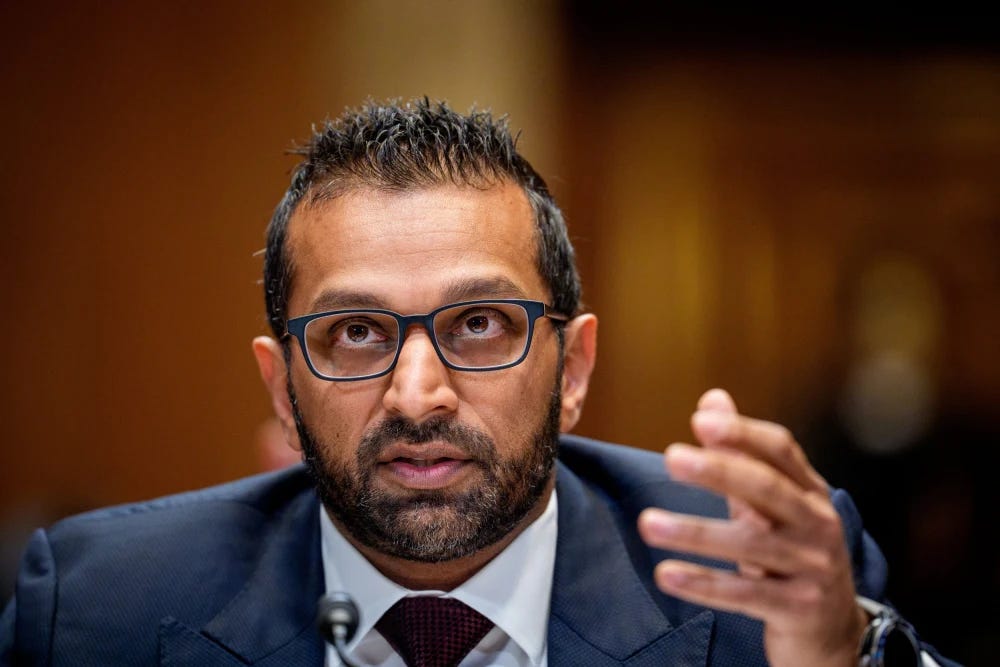
FBI Director Kash Patel, confirmed in February 2025, has a history of promoting Trump’s election fraud narrative. During his Senate confirmation hearing, Patel repeatedly refused to acknowledge that President Biden won the 2020 election, only stating that “President Biden’s election was certified. He was sworn in. And he served as the president of the United States”.
Patel previously pushed the false narrative regarding the results of the 2020 election while serving as an appointee at the Department of Defense during Trump’s first term. In June 2025, Patel disclosed that the FBI had shared “alarming” but unsubstantiated allegations about manipulation of the 2020 election to Republican Senator Chuck Grassley, claiming to have found “documents detailing troubling allegations associated with 2020 U.S. election, claims of interference by the CCP”.
The unverified assertion, which originated from an unnamed confidential source provided to the FBI in 2020, claimed that China manufactured counterfeit driver’s licenses for use in a mail-in ballot scheme. However, a 2020 Customs and Border Protection press release indicated that most confiscated fraudulent licenses were intended for college-aged individuals seeking fake IDs to purchase alcohol.
Broader implications for election integrity
Trump’s administration has launched an aggressive effort to reshape elections ahead of the 2026 midterm elections, including backing measures that would upend how states register voters and promising an executive order to eliminate mail-in voting, despite his voting via mail-in during the 2020 election cycle. The president has also threatened to prosecute election officials who administered the 2020 election.
“What a difference a rigged and crooked election had on our country. And the people who did this to us should go to jail. They should go to jail.”
— President Donald Trump, March 14, 2025
Federal and state law prohibit anyone, including federal officials, from intimidating voters and election officials. Civil rights organizations have expressed concern that the administration’s actions represent an unprecedented level of executive branch interference in U.S. elections.
Multiple investigations and court proceedings found no evidence of widespread fraud in the 2020 election that would have altered the outcome. Research has consistently shown that voter fraud is minuscule in U.S. elections, with the share of reported cases over recent decades representing less than 1% of votes cast.