
Trump opposes FCC plan to lift television ownership cap

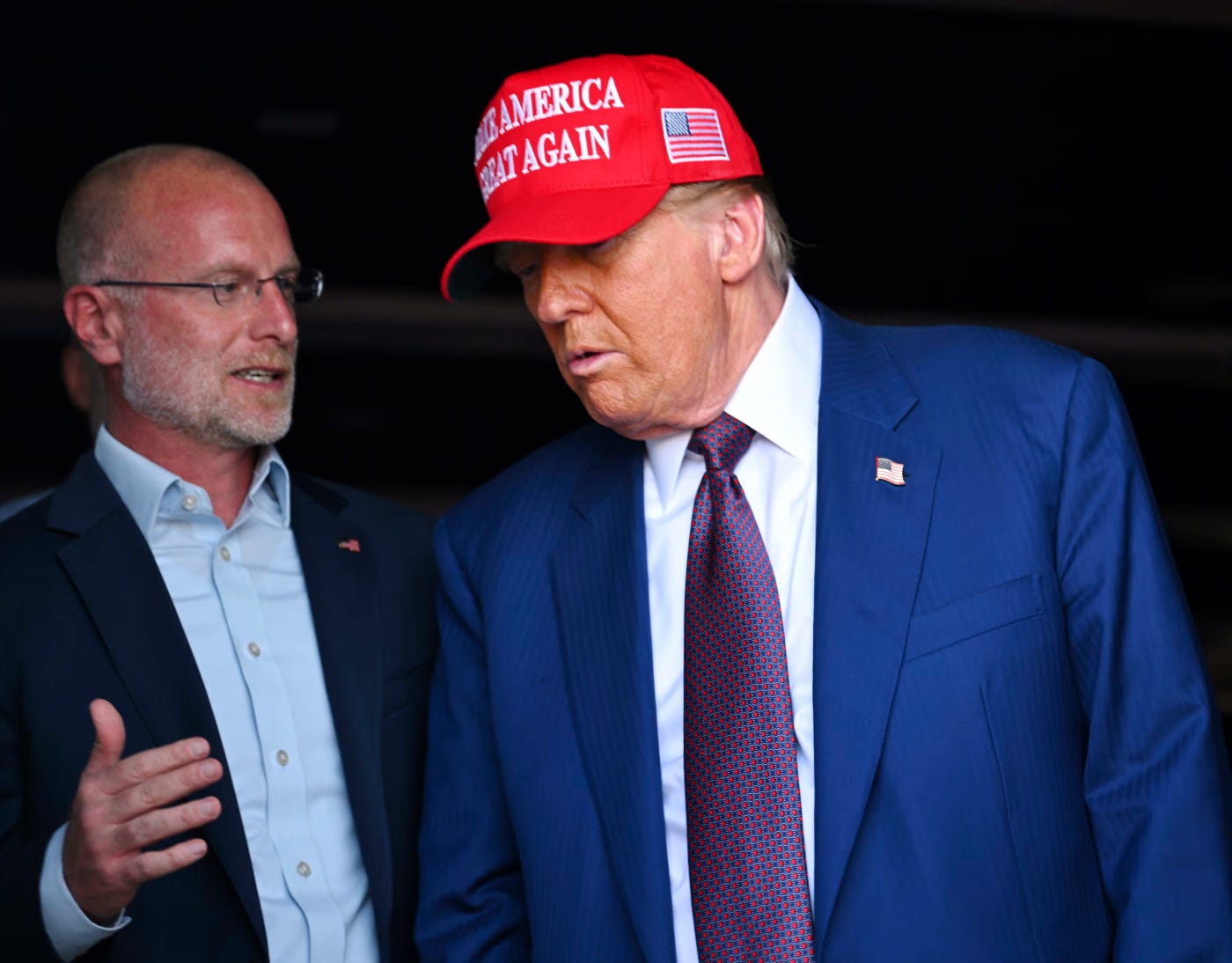
President Donald Trump has publicly broken with his own FCC chairman, Brendan Carr, over a proposed change to broadcast television ownership rules that would allow media companies to reach more than 39% of U.S. households. The president’s Sunday intervention on Truth Social sent shockwaves through the broadcasting industry and cast doubt on a proposed $6.2 billion merger between Nexstar Media Group and Tegna.
Trump’s position
In a post on Truth Social on Sunday, November 23, Trump stated he “would not be happy” if the FCC lifted the national ownership cap. “If this would also allow the Radical Left Networks to ‘enlarge,’ I would not be happy,” Trump wrote. “ABC & NBC, in particular, are a disaster – A VIRTUAL ARM OF THE DEMOCRAT PARTY. They should be viewed as an illegal campaign to the Radical Left. NO EXPANSION OF THE FAKE NEWS NETWORKS. If anything, make them SMALLER!”
Trump’s post linked to a Newsmax article featuring criticism from Christopher Ruddy, the company’s CEO and a longtime Trump ally, who argued that lifting the cap would be a “disaster” for conservatives.
The ownership cap explained
The national television ownership cap, which has been in place since the 1980s, restricts any single entity from owning television stations that collectively reach more than 39% of U.S. television households. Congress set the current 39% cap in 2004 after the FCC had previously raised it to 45%.
The regulation is designed to prevent media consolidation and preserve local journalism and viewpoint diversity. However, broadcast industry groups argue the rule is outdated in an era when streaming giants like Netflix, Amazon, and YouTube face no such restrictions.
FCC Chairman Carr’s position
FCC Chairman Brendan Carr, appointed by Trump, has been a vocal advocate for abolishing the decades-old ownership cap. Carr has repeatedly characterized these limits as “arcane artificial limits” that prevent local broadcasters from achieving the scale needed to compete with tech giants.
The FCC in June launched a proceeding seeking public comment on whether to “modify, retain or eliminate” the 39% national audience reach cap. As of late October, Carr stated the commission had not yet made a final decision on whether to lift the ownership limit.
Market impact
Tegna shares fell approximately 5% on Monday following Trump’s criticism, as the president’s comments cast significant doubt on the Nexstar-Tegna merger that hinges on changes to ownership rules. Nexstar’s proposed acquisition of Tegna would push the combined company’s reach to approximately 54.5% of U.S. television households, well above the current 39% limit.
Nexstar filed applications with the FCC last week seeking consent to transfer Tegna’s broadcast licenses, including a request for a waiver of the ownership cap rules. The company defended its position, stating that “the landscape is ripe for regulatory reform” and arguing that easing ownership limits would help local broadcasters compete against technology giants.
The Newsmax factor
Ruddy, whose conservative network Newsmax has emerged as a vocal opponent of lifting the cap, praised Trump’s intervention on Monday. “He’s strongly standing with us, and he’s saying no expansion on this cap,” Ruddy told Newsmax’s “National Report.”
“If people in New York were deciding what the local news in Pittsburgh was, or in Detroit, or in Cleveland, it’s a very dangerous thing. If the FCC had done this rule change 10 years ago, President Trump would never have been elected.”
— Christopher Ruddy, Newsmax CEO
Ruddy has argued that Nexstar’s proposed merger would create an entity reaching 80% of U.S. households and that the company operates “NewsNation,” which he characterized as a liberal cable news channel. He noted that 78% of Nexstar employees’ political donations in the last election cycle went to Kamala Harris.
Legal dispute over FCC authority
A significant legal question underlies the debate: whether the FCC has the authority to change the ownership cap without congressional approval. In 2004, Congress specifically set the cap at 39% and removed the rule from the FCC’s regular quadrennial review cycle.
Brian T. Fitzpatrick, a Vanderbilt University Law School professor and former clerk to Supreme Court Justice Antonin Scalia, filed an ex parte brief with the FCC arguing the agency lacks authority to modify the cap. “In 2004 Congress unequivocally set the national audience reach limit at 39 percent and removed any authority for the Commission to adjust it,” Newsmax stated in its own FCC filing.
The National Association of Broadcasters disputes this interpretation. Rick Kaplan, the organization’s chief legal officer, argued in a blog post that the FCC “has always maintained, under both Republicans and Democrats, that it has authority over the national cap.”
Democratic FCC Commissioner’s response
FCC Commissioner Anna Gomez, the sole Democrat on the commission, has stated that the Nexstar-Tegna deal cannot simply receive FCC approval through a waiver. Consumer advocacy groups, including Free Press, have argued the merger represents a “blatant violation” of federal law prohibiting excessive media concentration.
Broader consolidation activity
Despite the uncertainty, broadcast consolidation efforts continue. On the same day Trump made his comments, Sinclair Broadcast Group made a full takeover offer for E.W. Scripps at $7 per share, valuing the smaller broadcaster at approximately $538 million. Sinclair had steadily increased its stake in Scripps to 9.9% in recent weeks.
The broadcasting industry has been pursuing consolidation as companies struggle with declining traditional television viewership, a sluggish advertising market, and fierce competition from streaming platforms.
Response from broadcasters
Alex Siciliano, a spokesperson for the National Association of Broadcasters, responded to Trump’s comments by stating that ownership modernization “is not about enlarging national networks; it is about empowering local broadcasters that provide trusted news, emergency updates, and local journalism to their communities.”
The organization argued that the current rules “do not limit networks; they restrict local stations struggling to survive,” and characterized Ruddy’s campaign as an attempt “to prevent those local broadcasters from competing on an equal footing with a station like his, which already reaches the entire nation.”