
Trump and Xi discuss Taiwan, trade, and Ukraine in phone call

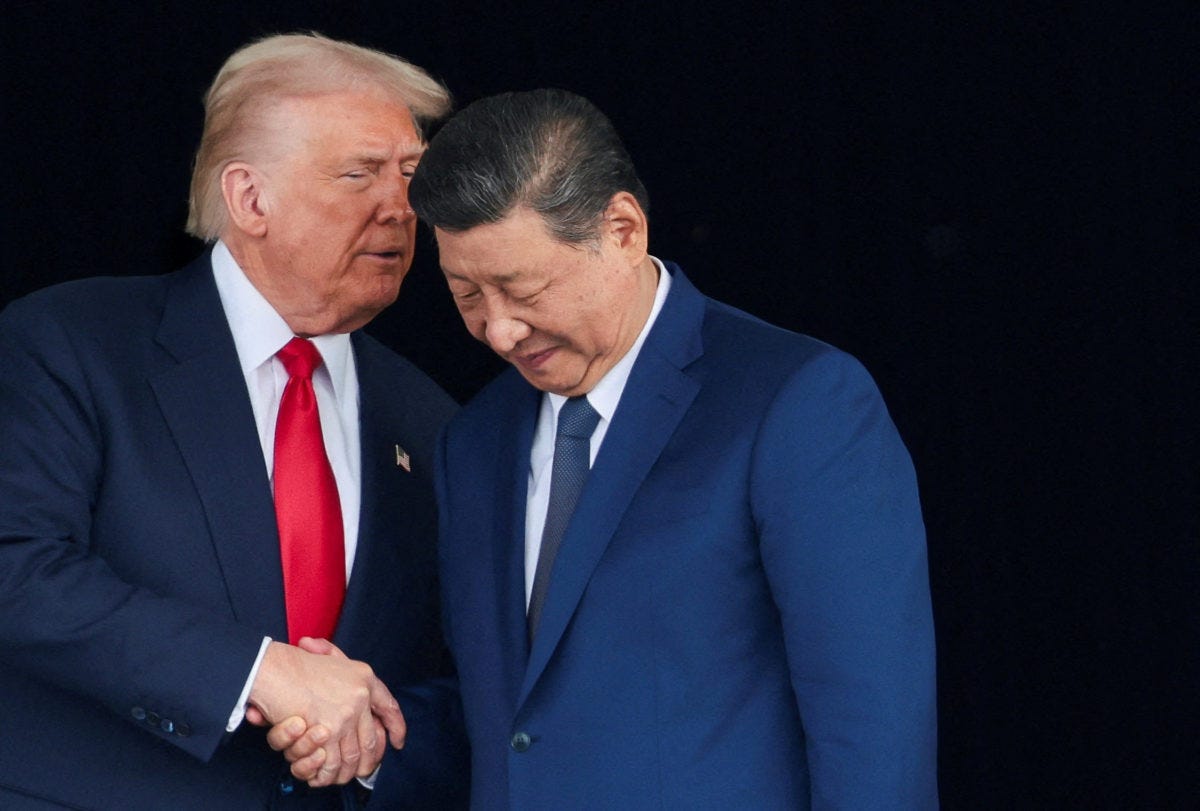
President Donald Trump and Chinese President Xi Jinping spoke by phone on Monday, November 24, addressing Taiwan, bilateral trade, and the war in Ukraine. The call—the first since their face-to-face meeting in South Korea on October 30—came amid heightened regional tensions involving Japan and ongoing negotiations over rare earth exports and agricultural trade.
Taiwan at the center of the conversation
Xi used the call to emphasize China’s stance on Taiwan in unusually direct terms. According to China’s state news agency Xinhua, Xi told Trump that “Taiwan’s return to mainland China is an integral part of the post-war international order.” Xi framed the issue in historical terms, stating that China and the United States, having “fought side by side against fascism and militarism” during World War II, should now “jointly safeguard the victory of World War II.”
The White House confirmed the call took place but provided no details on the Taiwan discussion. In his Truth Social post following the call, Trump did not mention Taiwan and instead focused on trade topics including Ukraine, fentanyl, soybeans, and “other Farm Products.”
Sun Yun, director of the China program at the Stimson Center in Washington, observed that China appeared to have initiated the call—a departure from Beijing’s typical practice of emphasizing that Xi participates in calls “upon request.”
“My best guess is that China is concerned about escalating tensions with Japan. The mention of Taiwan and the post-WWII order directly relates to the conflict with Japan regarding Taiwan.”
Japan-China crisis
The phone call took place in the midst of a major diplomatic crisis between China and Japan—the most severe in years. Japanese Prime Minister Sanae Takaichi, a conservative nationalist who took office in October, departed from the traditional ambiguity that Japan and the United States have maintained regarding Taiwan. On November 7, she stated in parliament that a potential Chinese attack on Taiwan could constitute “a situation threatening Japan’s survival,” a legal classification that would permit a Japanese prime minister to mobilize the military.
Beijing has responded with escalating measures, including travel warnings for Chinese citizens, bans on Japanese seafood imports, suspension of Japanese film releases, and diplomatic retaliation. On Friday, China brought the dispute to the United Nations, with Ambassador Fu Cong criticizing Takaichi for committing “a grave violation of international law” and warning that if Japan “dares to undertake armed intervention,” China would “resolutely exercise its right to self-defense.”
Chinese Foreign Minister Wang Yi, the highest-ranking Chinese official to comment on the tensions, said Japan “crossed a red line” and that China must “resolutely respond.” At the same time, all countries have a responsibility to “prevent the resurgence of Japanese militarism.”
Trade relations maintain fragile stability
Both leaders acknowledged the progress made since their summit on October 30 in Busan, South Korea, where they reached a one-year trade truce. Under that agreement, the United States reduced tariffs on Chinese goods by 10 percentage points to approximately 29.3 percent, while China lifted restrictions on rare earth exports and resumed soybean purchases.
Xi told Trump that bilateral relations have “generally maintained a steady and positive trajectory” since the Busan summit, adding that “the facts again show that cooperation benefits both sides while confrontation hurts both.”
However, U.S. and Chinese negotiators are still working to finalize terms for “general licenses” that China pledged to offer for rare earth and critical mineral exports, with a self-imposed deadline of the end of November. The Chinese statement revealed no concrete agreements on specific issues such as American soybean purchases.
Trump described the relationship as “extremely strong” and said a “good, and very important, deal for our Great Farmers” had been achieved.
Planned state visits for 2026
Both leaders agreed to reciprocal state visits. Trump announced he had accepted Xi’s invitation to visit Beijing in April 2026 and had invited Xi to the United States for a state visit later in the year.
“We agreed that it is important that we communicate often, which I look forward to doing.”
Ukraine peace efforts
The leaders also addressed Russia’s war in Ukraine. Xi reiterated China’s support for “all efforts that contribute to peace” and called on all parties to “narrow their differences.”
The call coincided with intensive negotiations in Geneva, where U.S., Ukrainian, and European officials made what they called “significant progress” toward a “refined peace framework.” Trump had set a Thanksgiving deadline for Ukraine to respond to a U.S. peace proposal, though Secretary of State Marco Rubio indicated discussions could continue past that date.