
No plans have been filed for Trump’s new ballroom, despite demolition already being under way

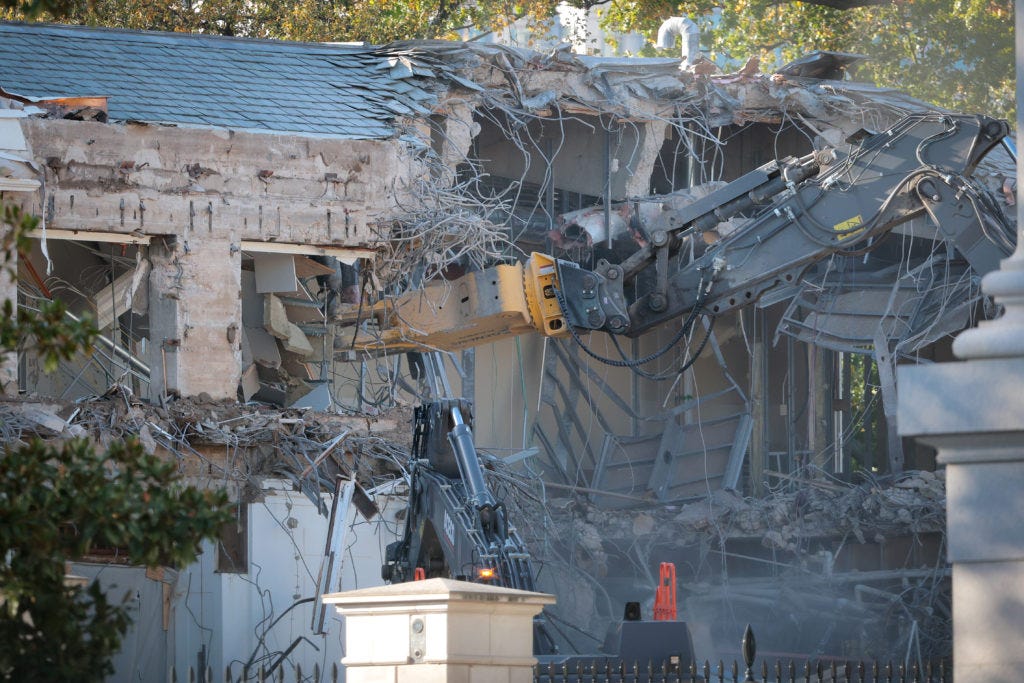
The entire East Wing of the White House will be demolished within days to make way for President Donald Trump’s planned $250-300 million ballroom, a dramatic expansion of a project that Trump initially claimed would not “interfere with the current building,” according to administration officials.
Demolition crews began tearing down the historic structure on Monday, with two senior administration officials confirming to CBS News that the complete teardown is expected to be finished by this weekend. The swift demolition has sparked outrage from historic preservation groups and raised questions about transparency, as the administration has yet to submit required plans to federal oversight bodies.
Scope of demolition exceeds original promises
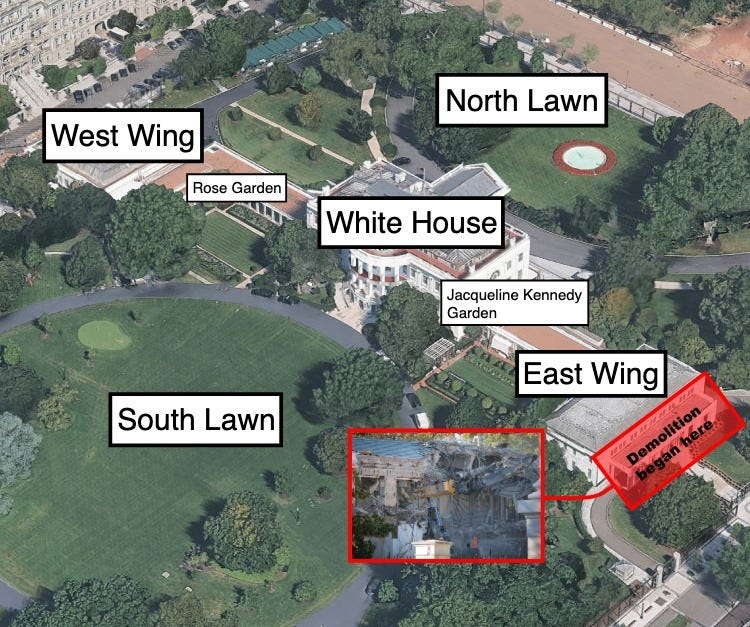
When Trump unveiled his ballroom plans in July, he assured the public that the 90,000-square-foot addition would be “near it but not touching it” and would pay “total respect” to the existing structure. The reality has proven far different, with the entirety of the East Wing—built in 1902 and last renovated in 1942—now slated for destruction.
“In order to do it properly, we had to take down the existing structure,” Trump said Wednesday in the Oval Office, adding that the East Wing “was never thought of as being much” and calling it “a very small building.”
The building being demolished houses the offices of the first lady, the White House calligrapher, military aides, and the social secretary. Staff from these departments have been relocated within the White House complex and the Eisenhower Executive Office Building.
No federal review process completed
Despite the extensive demolition underway, the White House has not submitted construction plans to the National Capital Planning Commission, the federal agency responsible for reviewing construction projects on government buildings in the Washington area. Records show that previous White House projects, including a fence and tennis pavilion, each required at least two years to navigate the commission’s approval process.
Will Scharf, the commission’s chairman and a senior Trump aide, indicated at a September meeting that the agency does not oversee demolition or site preparation for structures on federal land. However, several former commission members have challenged this interpretation.
The White House maintains it will eventually submit ballroom construction plans for review, while asserting that the commission lacks jurisdiction over the demolition decision.
Preservation groups demand halt
The National Trust for Historic Preservation, a nonprofit organization established by Congress to protect historic structures, sent a letter to administration officials Tuesday urging an immediate cessation of the demolition.
“We respectfully urge the Administration and the National Park Service to pause demolition until plans for the proposed ballroom undergo the legally mandated public review processes,” said Carol Quillen, the National Trust’s CEO.
The organization expressed concerns that the proposed 90,000-square-foot ballroom “will overwhelm the White House itself—which is 55,000 square feet—and may also permanently interfere with the carefully balanced classical architecture of the White House.”

Architecture critics and historians have voiced similar concerns about the scale and speed of the project. Joynt, a scientist and professor emeritus at Towson University in Maryland, told The Washington Post: “They’re destroying it. These changes are permanent. They are erasing that history forever.”
Funding and donor transparency questions
Trump announced Wednesday that the ballroom project would cost $300 million, an increase from the $200-250 million figures previously cited. The president has stated the project will be funded entirely through private donations and his personal wealth, with no taxpayer money involved.
Representatives from major corporations, including Lockheed Martin, Microsoft, Meta, Google, Amazon, OpenAI, Coinbase, Palantir, and T-Mobile, attended a “Legacy Dinner” at the White House last week to recognize ballroom donors. Individual donors reportedly include oil and gas mogul Harold Hamm, Blackstone CEO Steve Schwarzman, and cryptocurrency billionaires Tyler and Cameron Winklevoss.
Court filings reveal that YouTube will contribute $24.5 million toward the ballroom as part of a settlement related to Trump’s account suspension following the January 6, 2021, Capitol riot. Trump reportedly told donors at the dinner that some had inquired whether $25 million donations would be appropriate, adding, “I said: I will take it.”
Ethics experts have called for greater transparency regarding the project’s funding. “Considering what the project is for, that is to build in addition to … the People’s House, it should be completely transparent,” said Virginia Canter, chief ethics counsel at Citizens for Responsibility and Ethics in Washington.
Donations are being managed by the Trust for the National Mall, a nonprofit that partners with the National Park Service. Such nonprofits are generally not required to disclose their donors, although White House officials have indicated that they plan to release a donor list.
Administration defends project
The White House has dismissed criticism of the demolition as “manufactured outrage,” releasing a detailed blog post outlining prior renovations to the White House grounds. The administration maintains that the East Wing needed to be “modernized” for security and technological reasons, and that the scope of the project has always been subject to change.
Trump has championed the ballroom as a necessary addition to the White House, arguing that the East Room’s approximately 200-person capacity is insufficient for major state events. He noted that previous administrations have used temporary tents on the South Lawn for large gatherings, which press secretary Karoline Leavitt described as “unsightly.”
“I always said we need a ballroom because it’s very important,” Trump told reporters in July. “This is going to be a great legacy project and I think it’s going to be something incredible.”
The president has been envisioning a White House ballroom since at least 2010, when he offered to build one during Barack Obama’s presidency, though the offer was declined.
Limited oversight authority
Treasury Department employees, who have a direct view of the demolition from their offices adjacent to the East Wing, have been instructed not to share photographs of the work, with the department asserting this was to protect sensitive information.
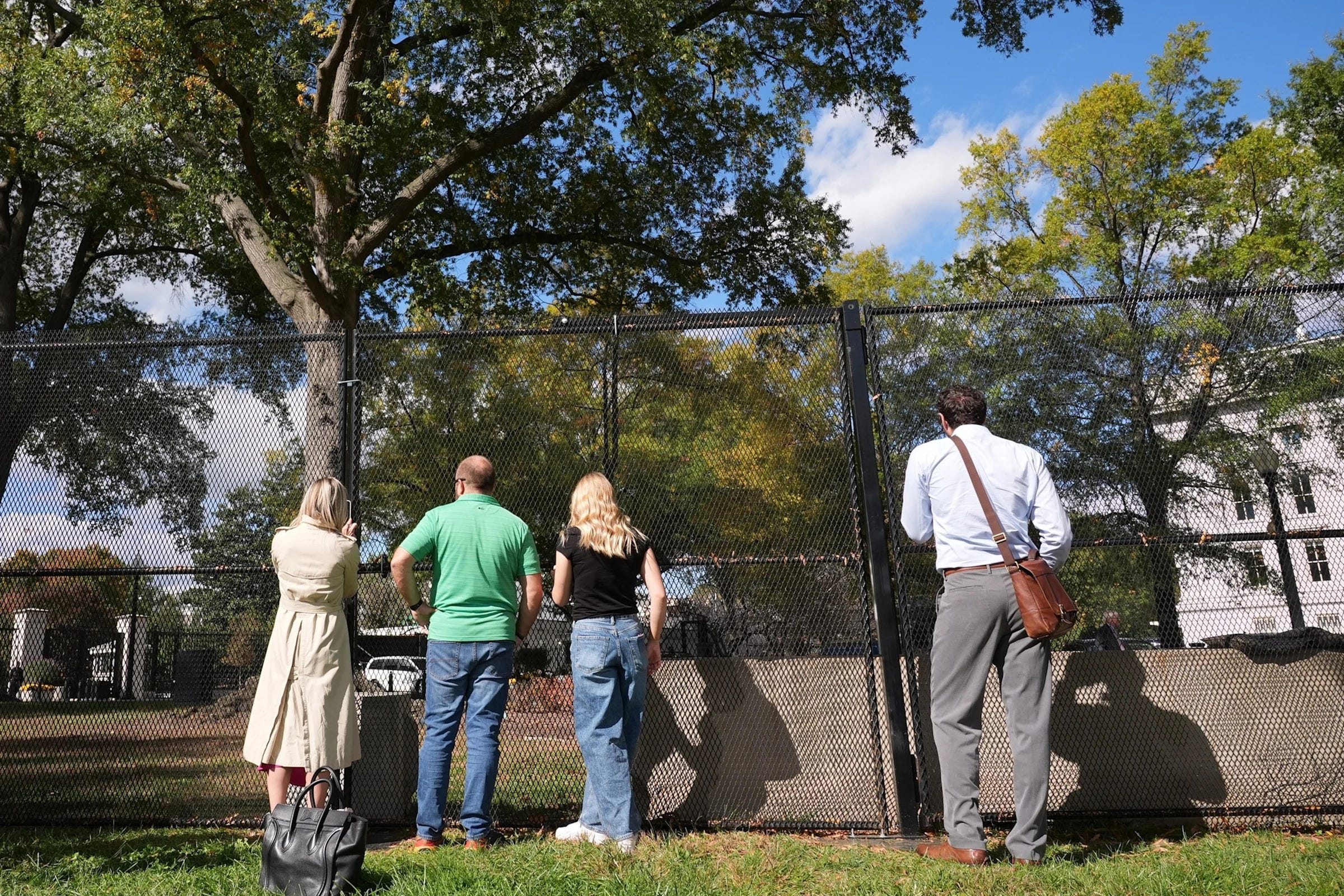
A seven-foot fence was erected on Wednesday around the East Wing site to block the demolition from public view. Heavy machinery has continued reducing the structure to concrete debris and twisted rebar, with approximately half of the building demolished by Wednesday.
While regulatory bodies such as the U.S. Commission of Fine Arts, the National Capital Planning Commission, and the D.C. State Historic Preservation Office would traditionally be involved in approving significant White House renovations, the White House is ultimately exempt from their binding authority due to the unique status of the presidential residence.
A White House representative told NBC News that “all historical elements of the East Wing, including features from Rosalynn Carter’s Office of the First Lady, have been preserved and stored under the oversight of the White House Executive Residence and the National Park Service, with assistance from the White House Historical Association.”
The ballroom project represents the first major structural change to the White House since extensive renovations under President Truman in 1948.