
Mosquitoes found in Iceland for first time in recorded history

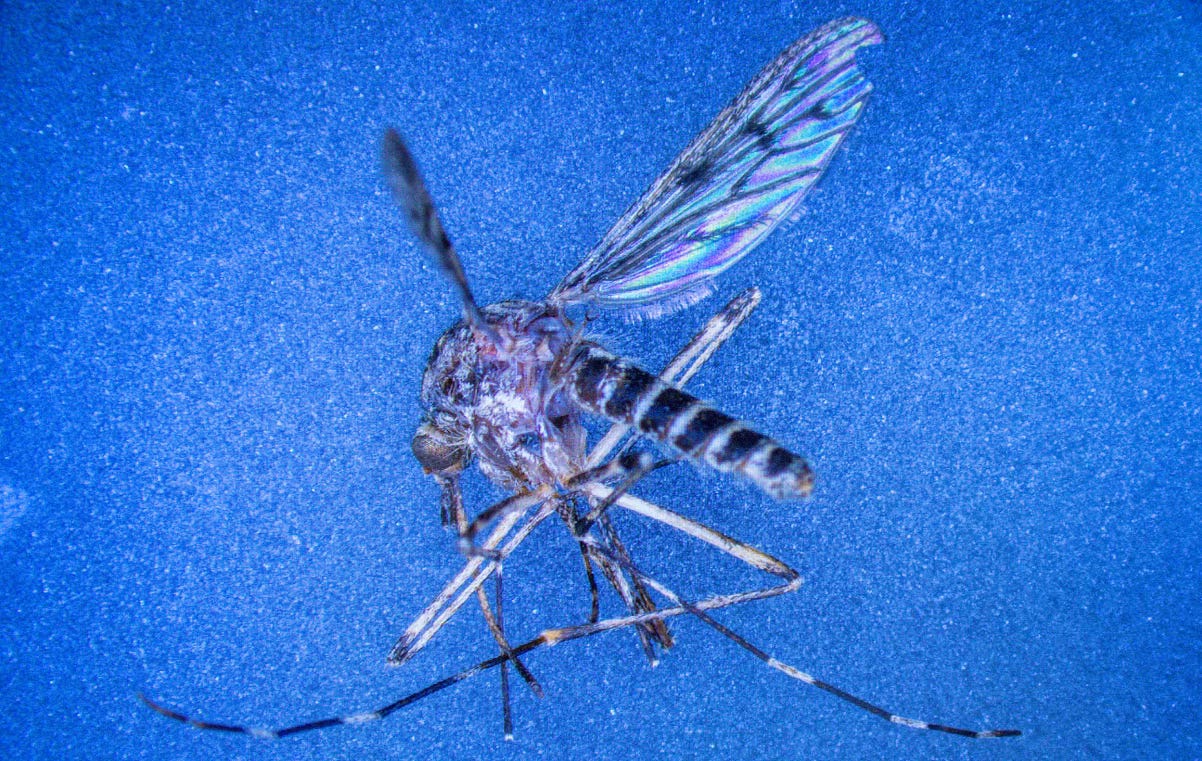
Iceland has lost its status as one of the world’s only mosquito-free zones after scientists confirmed the discovery of three mosquitoes in the wild, marking a historic first for the North Atlantic island nation. The finding leaves Antarctica as the sole remaining place on Earth without a mosquito population.
Discovery near Reykjavík
The mosquitoes were discovered by local nature enthusiast Björn Hjaltason in Kiðafell, Kjós, approximately 20 miles north of the capital Reykjavík. On the evening of October 16, Hjaltason spotted an unusual insect on his “wine rope”—a sugar-soaked fabric trap designed to attract moths for observation.
“I immediately suspected what was happening and swiftly collected the fly,” Hjaltason said, according to Icelandic media outlets. Over three evenings, he captured two female and one male mosquito, which he shared in the Facebook group Insects in Iceland before sending the specimens for scientific verification.
Matthías Alfreðsson, an entomologist at the Icelandic Institute of Natural History, confirmed the insects belonged to the species Culiseta annulata, a cold-tolerant mosquito native to regions from North Africa to northern Siberia. The species can survive harsh winters by seeking shelter in protected areas such as basements and barns.
Climate change concerns
The discovery has raised questions about whether rising global temperatures are making Iceland more hospitable to insects that were previously unable to survive its frigid climate. Iceland is warming at approximately four times the rate of the rest of the Northern Hemisphere, with 2025 experiencing some of the highest temperatures in the country’s recorded history.
“The mosquito sightings in Iceland are linked to effects of climate change,” said Carla Vieira, a researcher focused on vector-borne diseases at the QIMR Berghofer Medical Research Institute in Australia. “Increasing temperatures and milder winters are creating more favorable conditions for mosquitoes to endure and reproduce in areas that were once too frigid for them.”
In May 2025, certain areas of Iceland recorded temperatures exceeding 18 degrees Fahrenheit above seasonal averages, with an analysis by the World Weather Attribution network determining this extreme heat was made 40 times more probable due to climate change.
However, scientists remain cautious about drawing direct connections between climate change and this specific discovery. Colin Carlson, an assistant professor of epidemiology at Yale University School of Public Health, noted that mosquitoes have been documented quite far north in Scandinavia and that Iceland might have been suitable for mosquitoes even without recent warming.
Uncertain arrival and future establishment
The method by which the mosquitoes reached Iceland remains unknown, though experts suggest they may have arrived via ships or cargo containers. Gísli Már Gíslason, a professor emeritus at the University of Iceland who studies aquatic insects, noted that the country has experienced a notable increase in insect populations over the past forty years, coinciding with growing international tourism and increased air and sea traffic.
“Often these insects are brought in by airplanes and ships. It could be a coincidence that it arrives now and not at some earlier time. But it could also be that it’s become warmer.”
— Expert quoted in video coverage
Whether the species will successfully establish a permanent population in Iceland remains uncertain. Alfreðsson stated that further monitoring in spring will be necessary to determine if the mosquitoes can survive the winter and spread further.
Philip Weinstein, a public health professor at the University of Adelaide, expressed skepticism about long-term establishment, noting that “even for a species that can withstand cold, the severe conditions in Iceland would pose significant challenges for its survival and local establishment”. He added that disease transmission would be “extremely unlikely” even if the mosquitoes manage to thrive, as it would require both animal hosts and a considerable warm period for viruses to develop within the mosquitoes.
Broader environmental changes
The mosquito discovery is part of a broader pattern of environmental transformation in Iceland driven by climate change. Glaciers are retreating across the country, with the Okjökull glacier having completely vanished, while warm-water fish species such as mackerel are now appearing in Icelandic waters for the first time.
The finding has generated considerable interest among Iceland’s citizen scientists, with many sharing potential sightings on social media following the initial announcement. Hjaltason remarked that “the last fortress has fallen,” referring to Iceland’s long-standing reputation as entirely inhospitable to mosquitoes.
Despite the symbolic significance, Vieira noted that the mosquitoes are “unlikely to persist” in Iceland without consistently warm temperatures and stagnant water sources for breeding. However, she cautioned that “as climate continues to warm, the seasonal window conducive to mosquito survival may gradually widen, heightening the chances of future sightings even if temporary during warmer months”.