
Israel’s parliament advances West Bank annexation bill amid struggling ceasefire

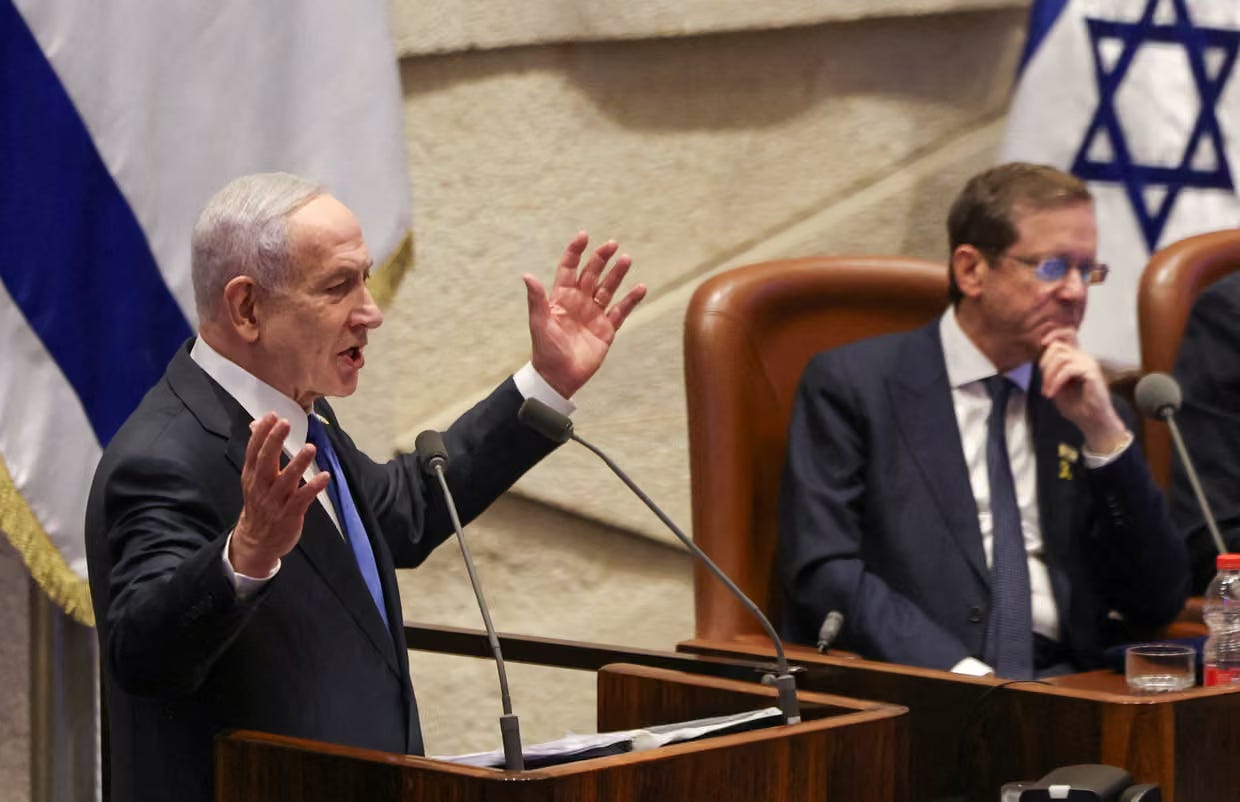
Israel’s Knesset gave preliminary approval to legislation that would extend Israeli sovereignty over the occupied West Bank on Tuesday, defying warnings from the Trump administration and triggering widespread international condemnation of a move that would formalize the annexation of Palestinian territory.
The bill passed in a narrow 25-24 vote, representing the first of four readings required to become law. According to the Knesset’s statement, the legislation seeks to “apply sovereignty of State of Israel to the territories of Judea and Samaria (West Bank).” A second, more limited bill proposing annexation of the Maale Adumim settlement passed 31-9.
Netanyahu’s coalition divided
Prime Minister Benjamin Netanyahu’s Likud party did not support the bills and called the vote “another provocation by the opposition aimed at damaging our relations with the United States.” Netanyahu had instructed his party members to abstain, though one Likud lawmaker cast the decisive vote in favor.
Despite Netanyahu’s public opposition, the bills received support from ultranationalist members of his governing coalition, including National Security Minister Itamar Ben-Gvir and Finance Minister Bezalel Smotrich. Ben-Gvir declared on social media that “the time for sovereignty has arrived now,” while Smotrich posted: “The Knesset has spoken. The people have spoken.”
The vote occurred during Vice President JD Vance’s visit to Israel, timing that US officials characterized as deliberately provocative.
Sharp US condemnation
US officials delivered unusually blunt criticism of the Knesset vote, with Vance calling it a “very stupid political stunt” and stating he felt personally insulted by the move.
“The West Bank is not going to be annexed by Israel. The policy of the Trump administration is that the West Bank will not be annexed by Israel. This will consistently be our policy,” Vance declared at the conclusion of his two-day visit to Israel.
Secretary of State Marco Rubio warned that annexation efforts “could be counterproductive” and might “pose a threat to the peace agreement” that established a fragile ceasefire in Gaza. President Trump had previously stated in September: “I will not allow Israel to annex the West Bank. It’s not going to happen.”
Trump went further on Thursday, warning that Israel would lose “all support from the US” if it proceeds with West Bank annexation, stating he had given his word to Arab leaders that annexation would not occur.
International and Palestinian response

The Palestinian Ministry of Foreign Affairs “strongly rejects the Knesset’s attempts to annex Palestinian land,” emphasizing that “the occupied Palestinian territories in the West Bank, including Jerusalem, and the Gaza Strip, constitute a single geographic unit over which Israel has no sovereignty.”
Hamas characterized the bills as illustrating “the ugly face of the colonial occupation,” declaring that attempts to annex West Bank lands are “invalid and illegitimate.”
More than a dozen countries issued condemnations, including Qatar, Saudi Arabia, Jordan, Egypt, Turkey, Indonesia, and Nigeria. Qatar’s Ministry of Foreign Affairs condemned the actions as “a blatant violation of the rights of Palestinian people and a challenge to international law.”
Jordan’s Foreign Ministry stated: “This is considered a violation of international law, a violation of the two-state solution and an assault on the inalienable right of the Palestinian people to self-determination and the establishment of their sovereign state on the borders of June 4, 1967, with East Jerusalem as its capital.”
Settlement expansion and legal context


Over 700,000 Israelis currently reside in settlements on occupied Palestinian land in the West Bank and East Jerusalem. International law regards all Israeli settlements in the occupied West Bank as illegal.
In 2024, the UN’s International Court of Justice ruled that Israel’s occupation of Palestinian territories, including the West Bank, and its settlements there are illegal and should be withdrawn “as rapidly as possible.” The court stated that Israel is “under a clear obligation to immediately cease all settlement activities in the West Bank.”
Settlement construction has accelerated dramatically under Netanyahu’s current government. Between June 18 and September 19, 2025, Israeli planning authorities advanced or approved approximately 20,810 housing units in the occupied West Bank, including East Jerusalem. Since October 7, 2023, Peace Now has documented 121 new illegal outposts established, representing 40 percent of all outposts built since 1996.
In September 2025, Netanyahu signed an agreement to expand the controversial E1 settlement project east of Jerusalem, which would effectively bisect the West Bank and sever its connection to East Jerusalem. Netanyahu declared at the signing: “There will be no Palestinian state. This place belongs to us.”
Violence and displacement
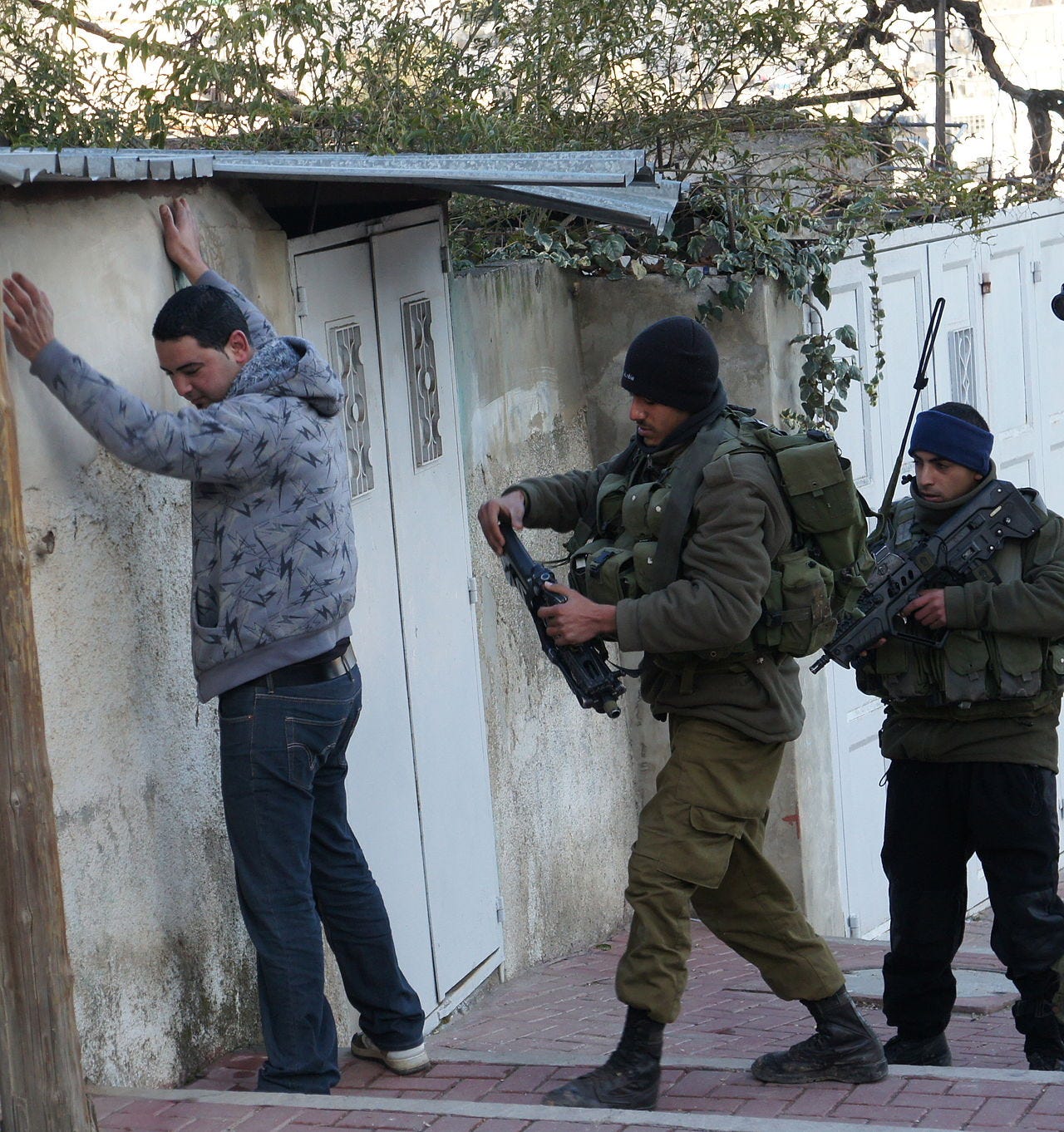
Since October 7, 2023, more than 1,000 Palestinians have been killed by Israeli forces or settlers in the West Bank, according to UN data. Thousands more have been forcibly displaced due to assaults, movement restrictions, and home demolitions.
Human rights organizations report that Israeli military forces seldom intervene to halt settler violence, and in many instances actively protect or assist perpetrators. Settlers, emboldened by far-right officials, have launched attacks on Palestinians, their properties, and lands, often with little to no repercussions.
Legislative path forward
The bills face three additional readings before becoming law. Without support from Netanyahu’s Likud party, which holds the largest bloc in the 120-seat Knesset, passage remains uncertain.
However, analysts note that de facto annexation is already occurring through settlement expansion, infrastructure development, and the transfer of governing powers from military to civilian Israeli agencies. West Bank activist Issa Amro stated: “It is about formalization of what’s going on on the ground.”
The Israeli organization Peace Now called 2024 “The Year of Annexation and Expulsion” in a February 2025 report, citing settlement expansion as “the biggest obstacle to peace.”
The Knesset vote represents a significant challenge to the two-state solution and places additional strain on the already fragile Gaza ceasefire that the Trump administration has sought to maintain.