
Israel kills Hezbollah military chief in first strike on Beirut since June

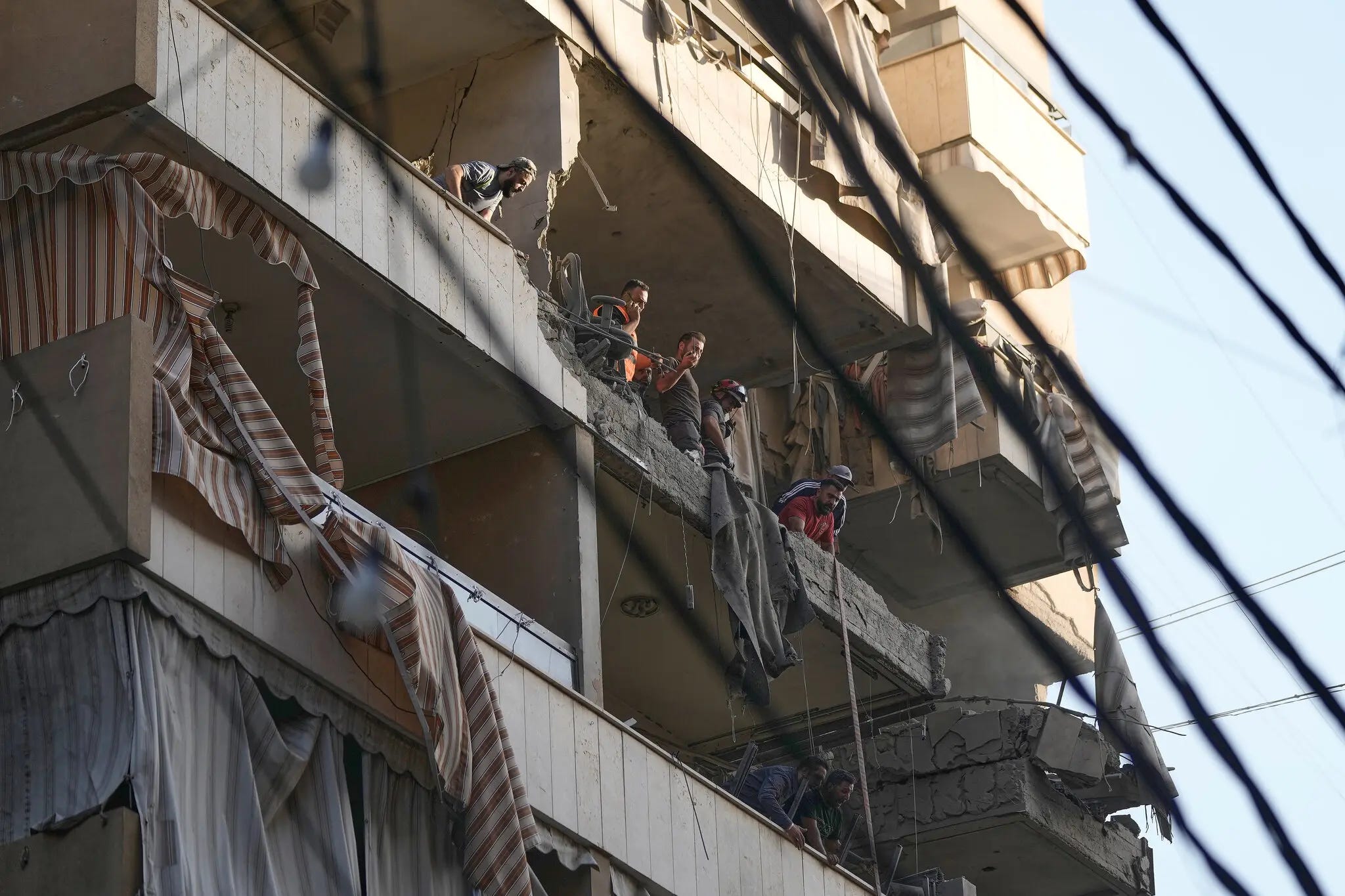
Israeli forces assassinated Hezbollah’s highest-ranking military commander on Sunday, November 23, 2025, in an airstrike on Lebanon’s capital, marking the most significant escalation between Israel and the Lebanese militant group since their ceasefire took effect one year ago.
The strike and its aftermath
The Israel Defense Forces confirmed that Haytham Ali Tabatabai, described as Hezbollah’s chief of staff and the organization’s second-in-command after Secretary-General Naim Qassem, was killed in an attack on an apartment building in the Haret Hreik neighborhood of Beirut’s southern suburbs. The strike, which hit the third and fourth floors of a nine-story building, resulted in five deaths and 28 injuries according to Lebanon’s Health Ministry.
The attack represented Israel’s first strike on Beirut since June 2025, when it claimed to have targeted underground drone manufacturing sites. No evacuation warnings were issued before the strike hit the densely populated residential area.
“The IDF struck, in the heart of Beirut, the Hezbollah chief of staff who led the organization’s military buildup and armament efforts.”
Prime Minister Benjamin Netanyahu stated he authorized the strike on the recommendation of Defense Minister Israel Katz and IDF Chief of Staff Lt. Gen. Eyal Zamir.
Who was Haytham Ali Tabatabai?
Born in 1968 in Beirut to a Lebanese mother and an Iranian father, Tabatabai joined Hezbollah as a teenager and became part of the organization’s founding generation. He previously commanded Hezbollah’s elite Radwan Force, which was responsible for planning cross-border operations against Israel, and led the group’s special forces operations in Syria and Yemen.
The United States designated Tabatabai as a terrorist in 2016, placing a $5 million bounty on him for information about his activities. Israel previously attempted to assassinate him in 2015 in southern Syria in a strike that killed Jihad Mughniyeh, son of the legendary Hezbollah commander Imad Mughniyeh.
Tabatabai rose to prominence in late 2024 after Israel killed much of Hezbollah’s senior leadership, including long-time chief Hassan Nasrallah and his presumed successor Hashem Safieddine. He assumed the role of military leader during the ceasefire period and worked to restore the group’s operational readiness.
Hezbollah’s response
Hezbollah confirmed Tabatabai’s death, eulogizing him as “the great martyr jihadist commander” who “dedicated his life to the resistance.” The organization characterized the strike as “a treacherous Israeli attack” and announced the deaths of four additional members: Ibrahim Ali Hussein, Rifaat Ahmed Hussein, Mustafa Asaad Barrou, and Qassem Hussein Barjawi.
Mahmoud Qmati, deputy chair of Hezbollah’s political council, stated the strike “crossed a new red line” and “opens the door to an escalation of assaults all over Lebanon.” However, the group’s leadership appeared divided on whether to respond militarily.
“There are two opinions within the group—those who wish to respond to the assassination and those who want to refrain from doing so—but the leadership tends to adopt the utmost forms of diplomacy at the present stage.”
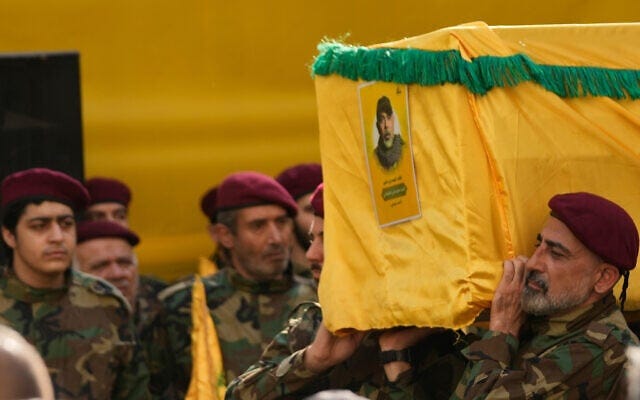
Thousands gathered on Monday at Tabatabai’s funeral in Beirut’s southern suburbs, chanting slogans against Israel and the United States while Israeli drones circled overhead. Iran condemned the killing as a “cowardly assassination” and a “flagrant violation” of the ceasefire, while Iran’s Islamic Revolutionary Guard Corps called for “revenge.”
Broader context and ceasefire violations
The assassination comes nearly one year after the United States brokered a ceasefire between Israel and Hezbollah in November 2024, intended to end fighting that killed more than 4,000 people in Lebanon and displaced over one million. Under the agreement, Hezbollah was required to withdraw north of the Litani River and have its military infrastructure dismantled, while Israel was supposed to withdraw its forces from Lebanese territory.
According to the United Nations Interim Force in Lebanon, Israel has committed nearly 10,000 violations of the ceasefire, including more than 7,500 air violations and nearly 2,500 ground violations. Israeli forces have carried out more than 500 airstrikes in Lebanon over the first ten months of the truce, killing at least 108 civilians, including 16 children. Lebanon’s Health Ministry has documented over 330 deaths and approximately 850 injuries from Israeli military actions since the ceasefire began.
Israel contends that Hezbollah has been attempting to rebuild its military capabilities in violation of the ceasefire terms. Netanyahu warned Sunday that Israel “will not allow Hezbollah to rebuild its power” and urged the Lebanese government “to fulfill its commitment to disarm Hezbollah.”
Pope Leo XIV’s visit looms
The strike occurred just days before Pope Leo XIV was scheduled to arrive in Lebanon for his first international trip as pontiff. The Pope is set to visit from November 30 to December 2, where he plans to advocate for peace, visit the site of the 2020 Beirut port explosion, and meet with religious and political leaders.
Lebanese President Joseph Aoun, a Maronite Christian who invited the Pope to Lebanon, condemned the Israeli strike and called on the international community to “intervene decisively and earnestly to halt the attacks against Lebanon and its populace.”
Regional implications
The assassination comes amid heightened tensions between Israel and Hezbollah, as the United States has been pressuring Lebanon to follow through on commitments to disarm the Iranian-backed organization. In September, the Lebanese military unveiled a five-stage plan to disarm Hezbollah, starting with a three-month effort south of the Litani River.
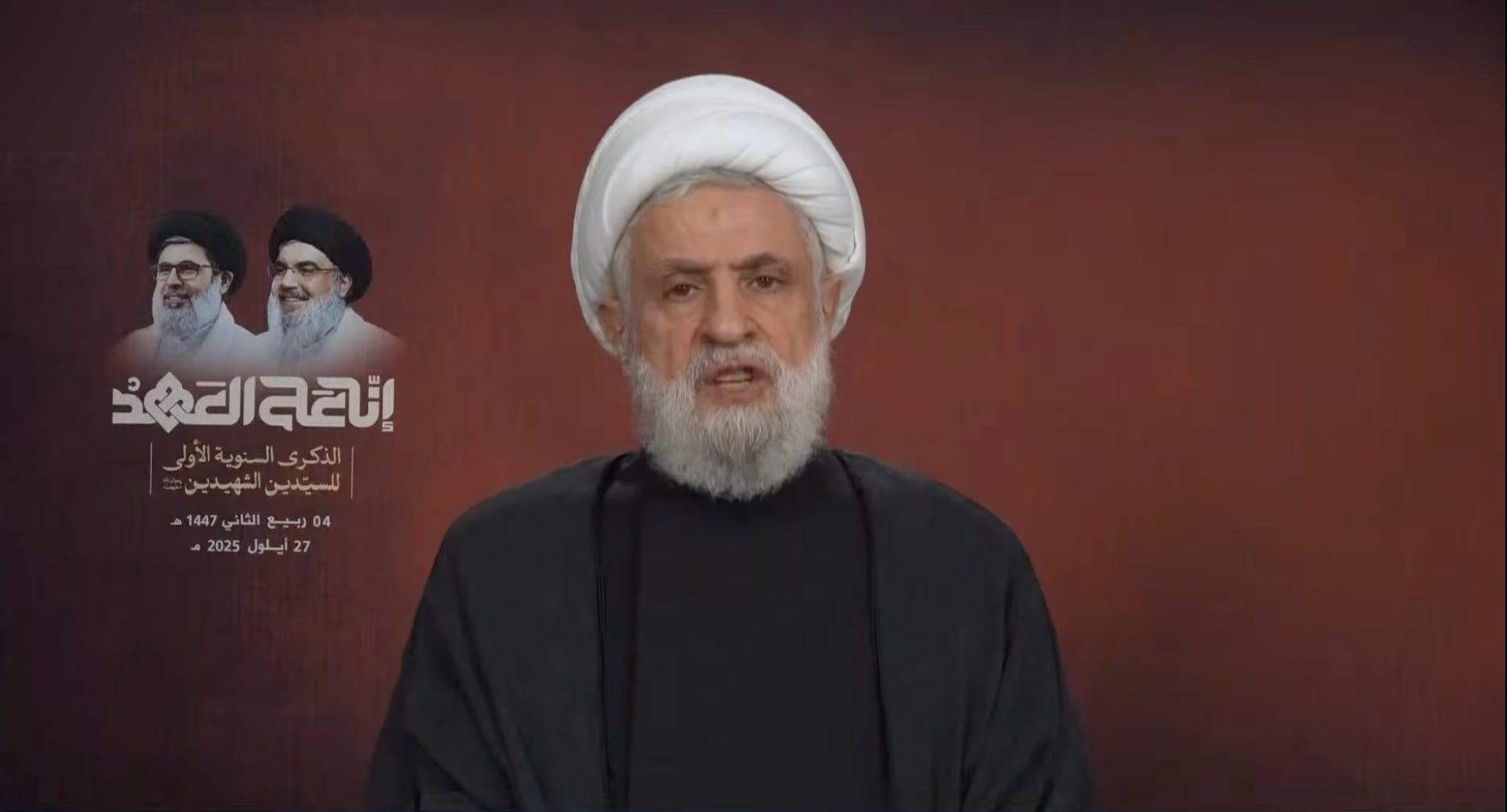
Hezbollah Secretary-General Naim Qassem has rejected calls to disarm, declaring in September that the group “will never forsake our weapons, nor will we yield them.” The organization’s position has complicated diplomatic efforts and raised concerns about a potential return to full-scale conflict.
Security analysts suggest Hezbollah is weighing its options carefully to avoid providing Netanyahu with a pretext for broader military action. However, officials within the group have warned that Israel’s continued provocations may eventually force a response.