
Greta Thunberg banned from Venice after climate activists dye Grand Canal green

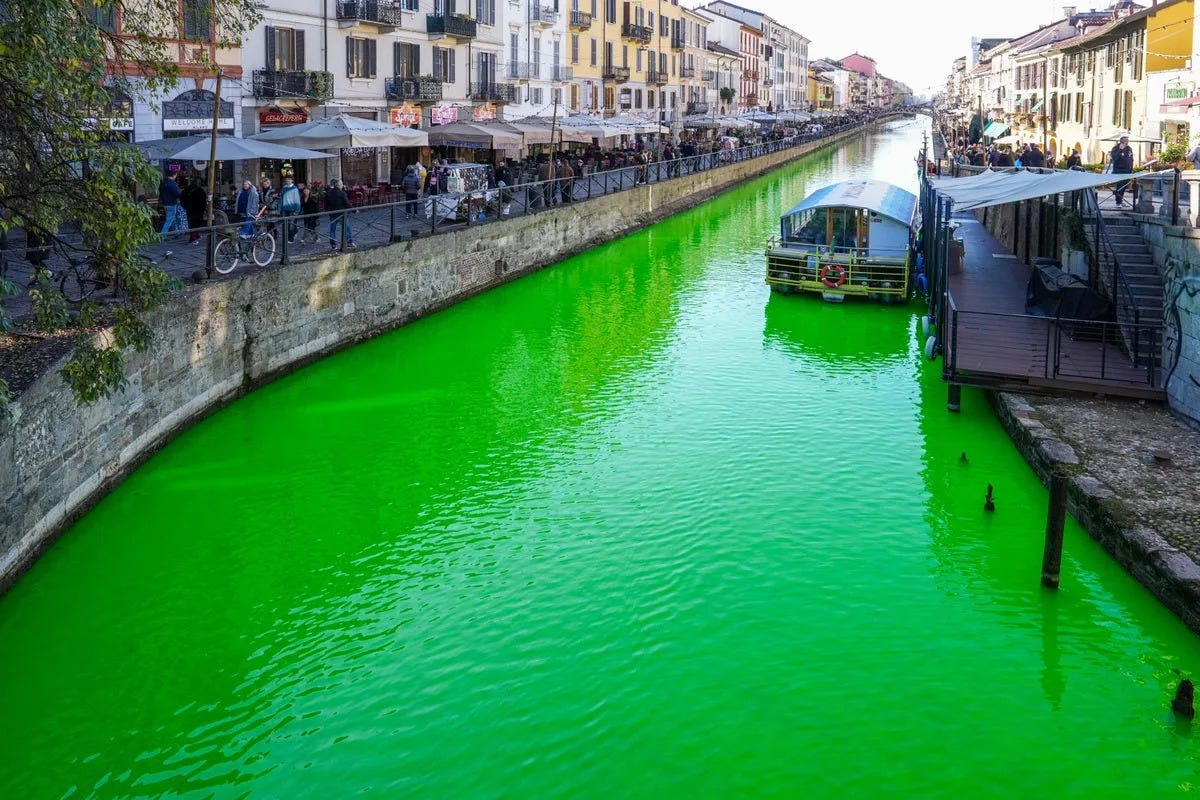
Swedish climate activist Greta Thunberg has been banned from Venice for 48 hours and fined €150 (approximately $173) following a coordinated protest in which members of the environmental group Extinction Rebellion dyed the city’s Grand Canal bright green on Saturday. The 22-year-old activist was among 36 demonstrators who received identical penalties for their participation in the “Stop Ecocide” campaign.
The protest took place on Saturday, November 23, as the United Nations COP30 climate conference in Brazil came to a close amid debates over fossil fuel commitments. Extinction Rebellion activists released what they described as an environmentally harmless fluorescein dye into waterways across ten Italian cities simultaneously, creating vivid green swirls in canals, rivers, lakes, and fountains to highlight “the massive effects of climate collapse”.
Coordinated demonstrations across Italy
The Venice action was part of a broader nationwide protest that targeted waterways in Bologna, Genoa, Milan, Padua, Palermo, Parma, Trieste, Turin, and Taranto. In Turin, activists dyed the Po River green, while in Bologna they targeted the Reno River and in Taranto the Tara River. Fountains in Genoa and Padua were also colored with the fluorescent dye.


At the iconic Rialto Bridge in Venice, demonstrators hung a banner reading “Stop Ecocide” across the Grand Canal. Activists dressed entirely in red with veils covering their faces staged a slow-moving flash mob through crowds of curious tourists, creating a theatrical display meant to symbolize a planet in crisis.
“This COP cannot end without a clear, just and equitable roadmap for the global phase out of fossil fuels.”
— Extinction Rebellion activist Paola
The group specifically criticized the Italian government, led by Prime Minister Giorgia Meloni, for opposing ambitious climate measures at COP30. According to Extinction Rebellion statements, Italy was among the countries blocking proposals to include fossil fuel phase-out language in the summit’s final agreement.
Official response and penalties
Luca Zaia, governor of the Veneto region, condemned the protest as “a disrespectful gesture towards our city, its heritage, and its vulnerability”. Zaia added that the action “risks having consequences for the environment” and expressed particular surprise at Thunberg’s involvement.
“I am even more surprised to see Greta Thunberg among the authors of this useless protest, who clearly aim — more than raising awareness about the environment — to give visibility to themselves,” Zaia stated.
Italian authorities issued the activists with daspo urbano, a type of preventive urban banning order that prohibits individuals from entering specific areas for periods ranging from 48 hours to two years. The 48-hour exclusion orders prevent the 37 activists from returning to Venice during that period. Of the protesters fined, 34 were Italian citizens, while three were foreign nationals: Thunberg from Sweden, along with one activist from Colombia and one from Ethiopia.
Extinction Rebellion defended its use of fluorescein, a synthetic dye commonly used in industrial water tracing and cave exploration. The compound, which appears as a bright green in alkaline water, is considered non-toxic and has been employed in similar protests since the 1960s.
COP30 context and fossil fuel debate
The Venice demonstration coincided with the final hours of negotiations at the COP30 climate summit in Belém, Brazil, where more than 80 countries had called for a clear roadmap to phase out fossil fuels. Brazilian President Luiz Inácio Lula da Silva had championed the initiative, declaring that “the fossil fuel era is coming to an end” during the conference’s opening days.
However, the final agreement reached on Saturday, November 22, notably omitted any explicit reference to fossil fuels or a binding plan for transition. Oil-producing nations, led by Saudi Arabia, successfully blocked language that would have established timelines for reducing fossil fuel consumption.
Instead of a formal commitment, COP30 President André Corrêa do Lago announced that Brazil would independently create two voluntary roadmaps: one for halting and reversing deforestation, and another for transitioning away from fossil fuels in a “just, orderly and equitable manner”. These roadmaps exist outside the official COP agreement and are not backed by all 195 participating countries.
The agreement does acknowledge that the “global shift toward low-emissions and climate-resilient development is irreversible and represents the direction of the future,” and commits to advancing implementation of the Paris Agreement “further and faster”. The final text also included commitments to triple adaptation finance by 2030 to help vulnerable nations cope with the impacts of climate change.
Previous protests and legal considerations
This was not the first time climate activists have targeted Venice’s waterways. In December 2023, Extinction Rebellion conducted a similar protest, dyeing the Grand Canal green and unfurling banners from the Rialto Bridge during COP28 climate talks. That demonstration resulted in seven fogli di via (city bans ranging from six months to four years), three daspo urbano orders, and numerous criminal charges.
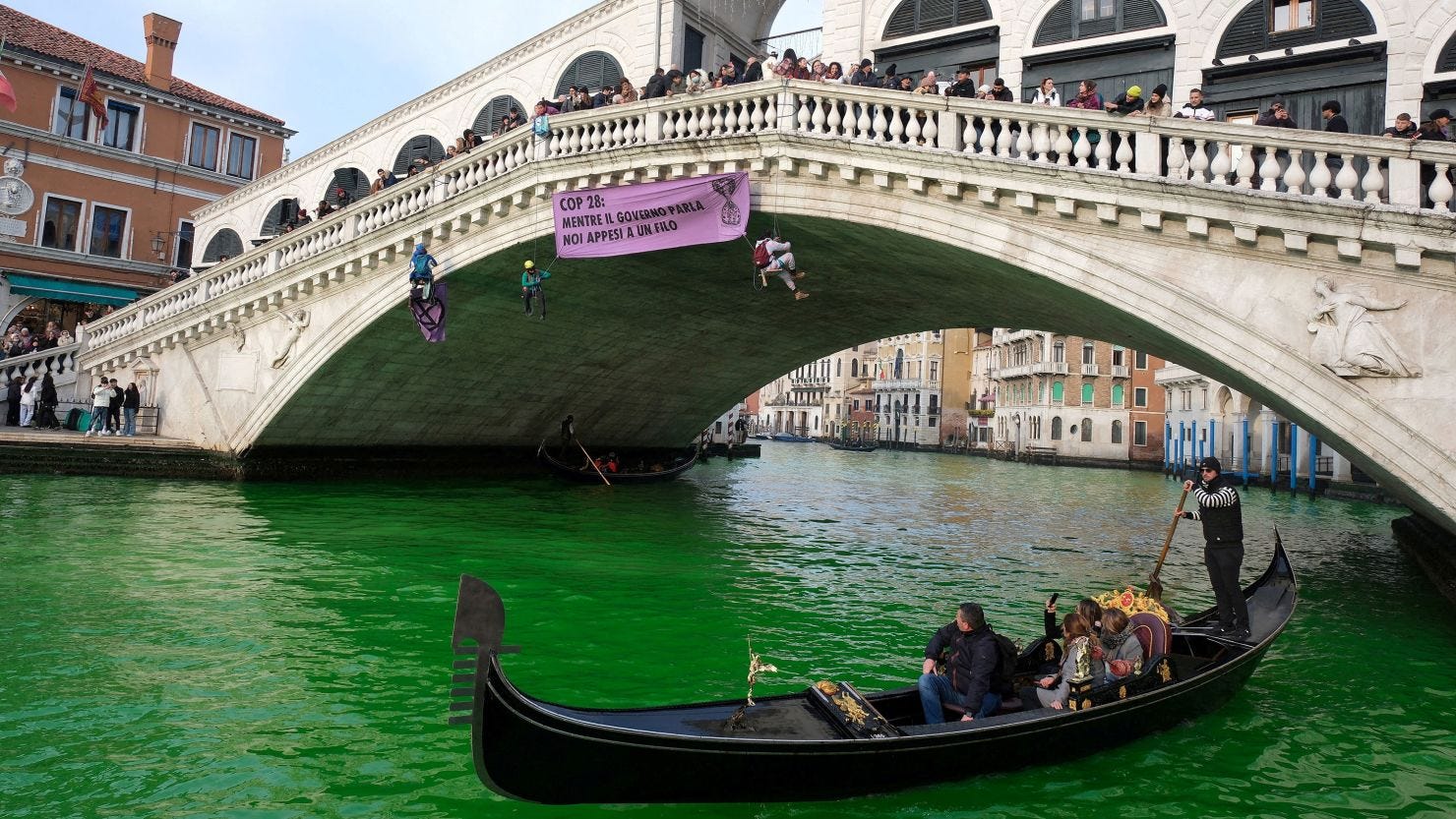
Italian legal experts have raised concerns about the use of preventive measures against peaceful climate protesters, arguing that city bans and exclusion orders may exceed their intended purpose of protecting public security. The measures are criticized as potentially infringing on constitutional protections for freedom of assembly and movement, particularly when applied to non-violent demonstrations.
Some tourists in Venice defended the protesters’ actions, arguing that the demonstration effectively highlighted the inadequacy of global leaders’ responses to climate change. However, local officials maintained that the protests disrupt public order and require costly cleanup operations, even when using non-toxic dyes.
The COP30 summit concluded with what critics described as a weak compromise that dell short of delivering the ambitious action scientists say is necessary to limit global warming to 1.5°C above pre-industrial levels. More than 30 countries signed a letter opposing the final draft, stating they could not “support an outcome that fails to provide a roadmap for a just, orderly and equitable transition away from fossil fuels”.