
Google achieves quantum computing 13,000 times faster than supercomputers

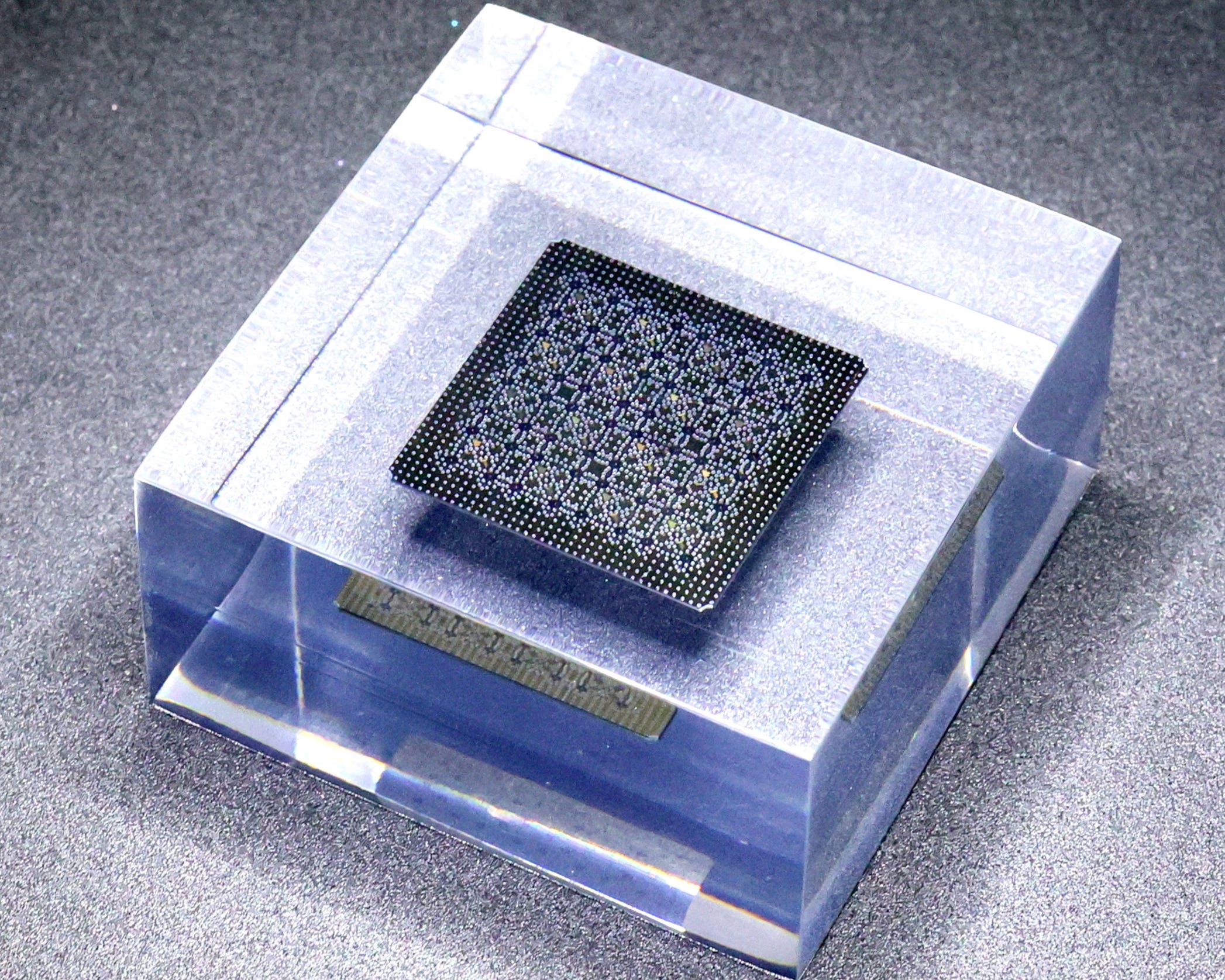
Google achieved a major quantum computing breakthrough on Wednesday, developing an algorithm that completes tasks beyond the capabilities of conventional supercomputers. The algorithm, called “Quantum Echoes,” performed calculations 13,000 times faster than the world’s most powerful classical computers and represents the first time a quantum computer has successfully run a verifiable algorithm that surpasses supercomputer abilities.
Algorithm computes molecular structures
The Quantum Echoes algorithm computed the structure of molecules, paving the way for potential discoveries in medicine and materials science. Results for two molecules were cross-checked using nuclear magnetic resonance technology—the same technology behind MRI scans—and revealed information not normally disclosed by NMR. The breakthrough was detailed in a peer-reviewed paper published in Nature on Wednesday.
“This is the first time in history that any quantum computer has successfully run a verifiable algorithm that surpasses the ability of supercomputers. This repeatable, beyond-classical computation is the basis for scalable verification, bringing quantum computers closer to becoming tools for practical applications.”
The algorithm ran on Google’s Willow quantum chip, which contains qubits—quantum bits that can exist in multiple states simultaneously through a property called superposition. Unlike classical computer bits that represent either 0 or 1, qubits can encode various combinations simultaneously, allowing quantum computers to compute through vast numbers of different outcomes.
Nobel laureate contributes to breakthrough
Michel Devoret, Google’s chief scientist of quantum AI, who won the Nobel Prize for physics earlier this month, called the announcement another milestone in his field. Devoret shared the 2025 Nobel Prize with John Clarke and John Martinis for their 1980s research on quantum mechanical tunneling in electrical circuits, which established crucial foundations for quantum computing.
“This marks a new step towards full-scale quantum computation,” Devoret said.
Real-world applications still years away
Despite the breakthrough, Google acknowledged that real-world use of quantum computers remains years away. Hartmut Neven, a vice president of engineering at Google, said commercial quantum computing applications might be five years away.
“With quantum echoes we continue to be optimistic that within five years we’ll see real-world applications that are possible only on quantum computers,” Neven said.
Winfried Hensinger, a professor of quantum technologies at the University of Sussex, cautioned that while Google demonstrated “quantum advantage,” the achievement focused on a narrow scientific problem without significant real-world impact. Fully fault-tolerant quantum computers capable of realizing the most exciting applications would require machines hosting hundreds of thousands of quantum bits.
“It’s important to understand the task Google has achieved is not quite as revolutionary as some of the world-changing applications that are anticipated for quantum computers,” Hensinger said. “However, it is yet another convincing proof that quantum computers are gradually becoming more and more powerful.”
Technical challenges remain
Truly powerful quantum computers that can address a range of challenges require millions of qubits—something current quantum hardware cannot manage because qubits are volatile and must be kept in highly controlled environments free from electromagnetic interference. The Willow chip used in this breakthrough contains 105 qubits.

“Some of the most interesting quantum computers being discussed will require millions or even billions of qubits,” Hensinger said. “This is more difficult to achieve with the type of hardware used by the authors of the Google paper as their hardware requires cooling to extremely low temperatures.”
Google argues that quantum computers will eventually create unique data that can be fed into AI models, making them more powerful as a consequence. The progress has led cybersecurity experts to warn that quantum computing can crack high-level encryption, prompting calls for governments and companies to adopt quantum-proof cryptography.