
Appeals court clears path for Trump to deploy National Guard to Portland, Oregon

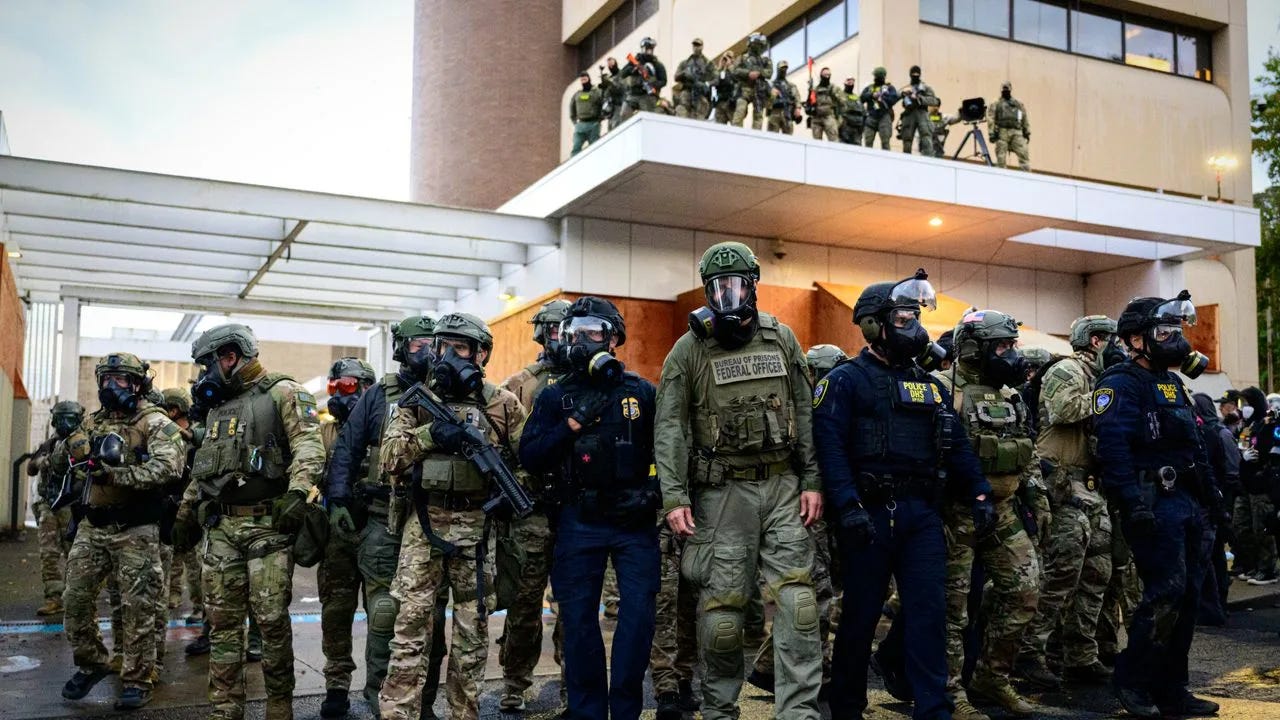
A federal appeals court ruled Monday that President Donald Trump can proceed with deploying National Guard troops to Portland, Oregon, overturning a lower court order that had blocked the administration’s military deployment to the Democratic-led city. The 2-1 decision by the U.S. Court of Appeals for the Ninth Circuit represents a significant legal victory for the administration as it continues efforts to send military forces to cities across the country.
Court ruling
The appeals court panel, composed of two judges appointed by Trump—Ryan Nelson and Bridget Bade—ruled in favor of the administration, stating that “after considering the record at this preliminary stage, we conclude that it is likely that the President lawfully exercised his statutory authority”. The decision reverses a temporary restraining order issued by U.S. District Judge Karin Immergut, also a Trump appointee, who had previously blocked the deployment.
However, a second restraining order issued by Judge Immergut remains in effect, which prohibits the deployment of any National Guard personnel to Oregon from any state. The Justice Department has asked Immergut to dissolve this second order, arguing that both restraining orders are based on the same legal reasoning and should “rise or fall together”.
Judge Susan Graber, appointed by President Clinton, issued a forceful dissent criticizing the majority’s decision:
“Given Portland protesters’ well-known penchant for wearing chicken suits, inflatable frog costumes, or nothing at all when expressing their disagreement with the methods employed by ICE, observers may be tempted to view the majority’s ruling, which accepts the government’s characterization of Portland as a war zone, as merely absurd. But today’s decision is not merely absurd. It erodes core constitutional principles, including sovereign States’ control over their States’ militias and the people’s First Amendment rights to assemble and to object to the government’s policies and actions.”
Background and justification
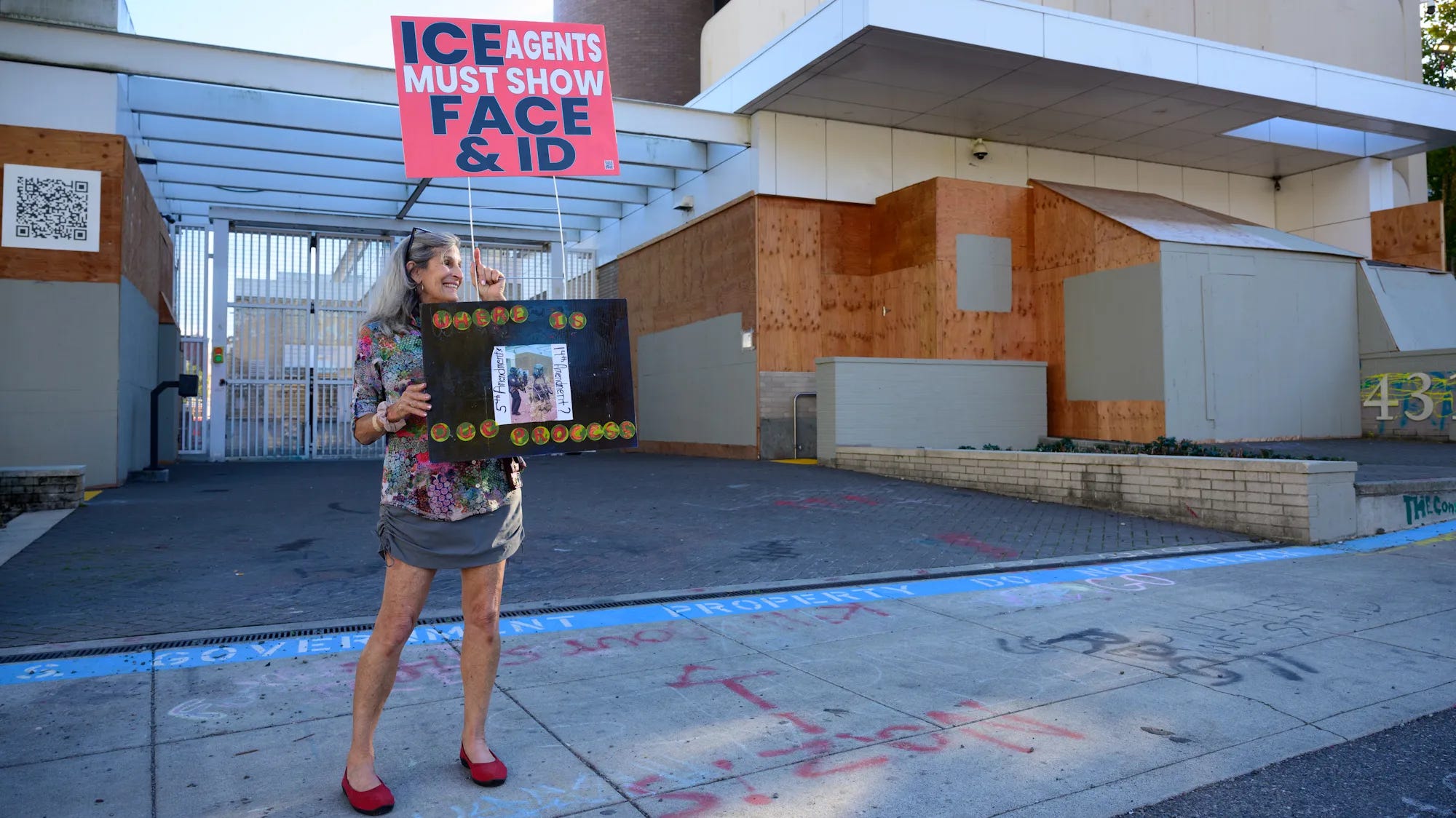
President Trump announced on September 27, 2025, via Truth Social that he would deploy National Guard troops to “protect War ravaged Portland,” claiming the city’s Immigration and Customs Enforcement (ICE) facility was “under siege from attack by Antifa, and other domestic terrorists”. The administration federalized 200 members of the Oregon National Guard on September 28.
Defense Secretary Pete Hegseth issued a memo indicating that National Guard troops could be stationed in areas where protests “are occurring or likely to occur” and could assist federal agents implementing Trump’s immigration policies.
State and local response
Oregon officials have strongly contested the president’s characterization of conditions in Portland. Governor Tina Kotek told NPR on October 6 that Trump’s description was “ludicrous,” stating: “We had thousands of people on the streets of Portland for the Portland Marathon. The weather is beautiful. The city is thriving”.
Oregon Attorney General Dan Rayfield warned that the ruling, if allowed to stand, would grant Trump “unilateral power to put Oregon soldiers on our streets with almost no justification,” adding: “We are on a dangerous path in America”. Rayfield announced plans to ask a larger panel of the appeals court to reconsider Monday’s decision.
Portland Mayor Keith Wilson emphasized that military intervention is unnecessary, stating: “Portland is peaceful. The military has no place in our streets”.
Facts on the ground
Police records indicate that protests at the ICE facility had been consistently small and uneventful for more than a month before Trump’s announcement. Judge Immergut’s initial ruling described the Portland protests as “not significantly violent or disruptive,” noting that protests rarely numbered more than 30 people.
The weekend of October 18-19 saw massive peaceful protests across the country, with organizers reporting approximately 7 million participants in over 2,700 “No Kings” demonstrations nationwide, including tens of thousands in Portland. Law enforcement indicated that most gatherings were peaceful, with many large cities reporting no incidents or arrests.
Broader pattern of deployments
Portland is among several Democratic-led cities where the Trump administration has sought to deploy National Guard troops, including Chicago, Los Angeles, Washington, D.C., Memphis, and San Francisco. These deployments have been justified by the administration as necessary to combat crime and protect federal immigration enforcement operations.
The Supreme Court is currently considering an emergency appeal regarding Trump’s attempt to deploy National Guard troops to Chicago, with a decision expected within days. A federal appeals court in Illinois had previously upheld a lower court’s decision blocking deployment in that state.
An appellate panel is scheduled to hear arguments on Wednesday concerning the deployment of National Guard troops to Los Angeles.
Civil liberties concerns
The American Civil Liberties Union (ACLU) expressed disappointment with the court’s ruling. Hina Shamsi, director of the ACLU’s National Security Project, stated:
“As the founders highlighted, the deployment of [troops] should be for rare extreme emergencies as a last resort, which is far from the actions being taken by the Trump administration in Portland, Chicago, Los Angeles, and Washington, D.C. The presence of troops in otherwise vibrant American cities diminishes a sense of security and undermines fundamental freedoms to assemble and voice dissent.”
Civil liberties organizations have accused immigration agents of engaging in racial profiling and detaining individuals, including U.S. citizens, without justification during enforcement operations.
Next steps
The legal battle continues as Oregon officials pursue further appeals, and the second restraining order remains in place. The Trump administration has requested that Judge Immergut immediately dissolve her second order to allow troops to deploy.
The full Ninth Circuit Court of Appeals could potentially reconsider the panel’s decision if Oregon’s request for a broader review is granted.